Norwegian Women in Translation for #WITmonth

I’m always so surprised when I hear about something which I feel I should have known about before but didn’t. That happened recently with Women in Translation Month (WITmonth), an annual month-long reading event dedicated to promoting women writers from around the world who write in languages other than English. It takes place every August. This is right in my wheelhouse – reading, books in translation, women – how could I miss it?

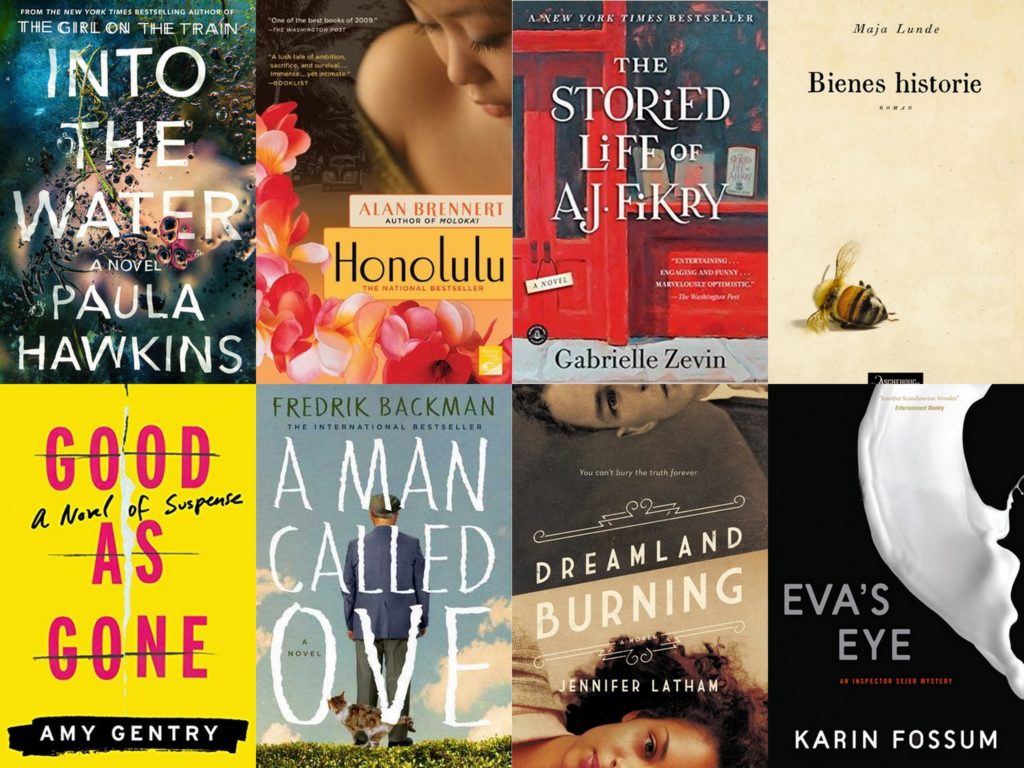
WITmonth has given me incentive to dig a little deeper to find Norwegian female authors whom I may not have been aware of it. A great source of information was lists of winners of various Norwegian and Scandinavian literary awards (see end of post for list of awards). My list of Norwegian female authors is by no means an exhaustive list. In my digging, I found that many Norwegian female authors’ works in translation are not available in English (but readily available in many other languages!) or no longer in print in English.

Usually, I read my Norwegian books in Norwegian, but occasionally I make an exception. For example, sometimes the cost of getting a book in Norwegian instead of English is not warranted. Other times, if the book is written in nynorsk (New Norwegian) instead of Bokmål (Book Language), I will read it in English instead since I’m not as comfortable with nynorsk. Now, I have another reason, to support Norwegian female authors in translation and their translators.

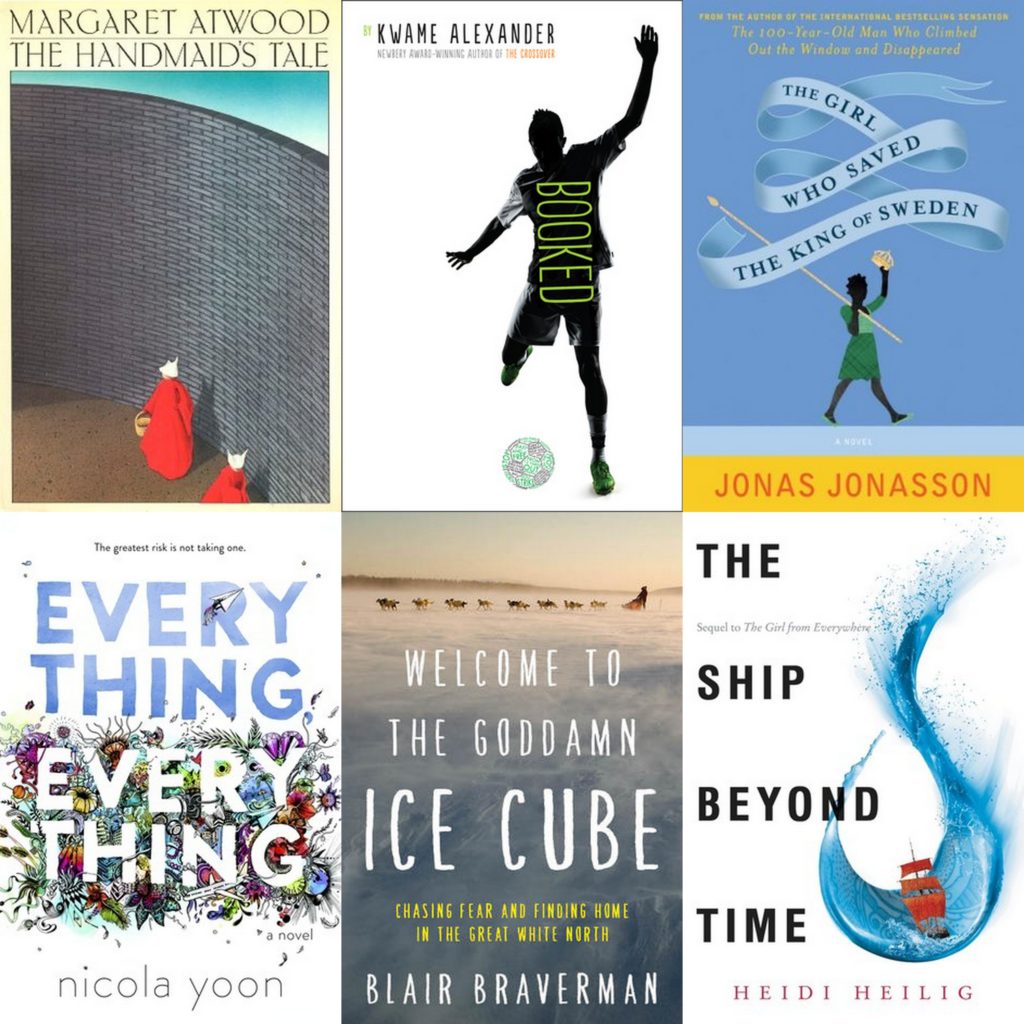
Many of these authors I’ve already heard about, some I’ve already read, others were already on my TBR list, many were new to me. I’d love to hear your thoughts on these authors. Continue reading

A Glimpse of Oslo: Vulkan Bee Garden

Seeing Vulkan Bee Garden at Mathallen was high on my wishlist for this summer’s visit to Oslo. These urban beehives are not your ordinary beehives. They are an art installation as much as a beehive. The Vulkan beehives were designed by Norwegian architecture firm Snøhetta, the same firm that designed Oslo’s National Opera House, New York City’s National September 11 Memorial Museum Pavilion, and so many other interesting projects around the world.

I remember reading about Oslo creating the world’s first highway for bees a couple of years ago and feeling great pride that my country was doing that. The bee highway’s aim was to “give the insects a safe passage through the city” by providing food and shelter as they traversed the city from one end to the other. This was not a government initiative, but rather one by ByBi, an urban guild of beekeepers. Participants in the project are varied – businesses, schools, associations, and private individuals. Everyone is encouraged to build bee-friendly feeding stations and accommodations in the city.

The Vulkan beehives were installed in 2014. As explained by Vulkan on their page about the bee garden, “The natural honeycomb geometry was the inspiration for the form and pattern, along with the bees own production pattern; the hexagon-shaped cells bees store their honey in. Using a light colored wood with a finish that is honey in tone makes the hives look like big hexagon jars of honey.” Inside the structures are standard foam beehives.

So I made plans to meet my aunt for lunch at Mathallen, a food court with specialty shops and cafes, and a lovely lunch we had. It wasn’t until we were on our way out that I discovered where the beehives were. Next time I’ll see about enjoying my lunch outside Mathallen instead so I can appreciate the beehives a little longer than just passing by. It would also be fun to buy some Vulkanhonning, honey from the Vulkan beehives, while I am there.

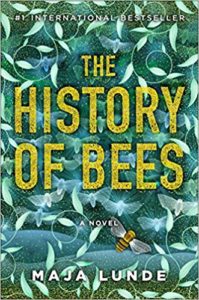
On a related bookish note, I am currently reading a Norwegian novel called Bienes historie by Maja Lunde that I highly recommend. It will be released in the USA as The History of Bees on August 22. The novel includes three storylines which all revolve around the importance of bees, or lack thereof. The first storyline takes place in England in the mid-1850s when beehives are being improved, the second one in USA in 2007 when there is an increase in the number of colony collapse disorders being reported, and the last one in China in 2098 when humans have had to resort to hand-pollination due to the total collapse of bees. I’m really intrigued by the book and am happy that English readers can also enjoy it soon. I encourage you to check it out.

For some insight into the beekeeping at Vulkan beehives, here’s a short video. It is in Norwegian, but the images are worth your time.

Checked Off My Norway Bucket List: Drive the Atlantic Road!

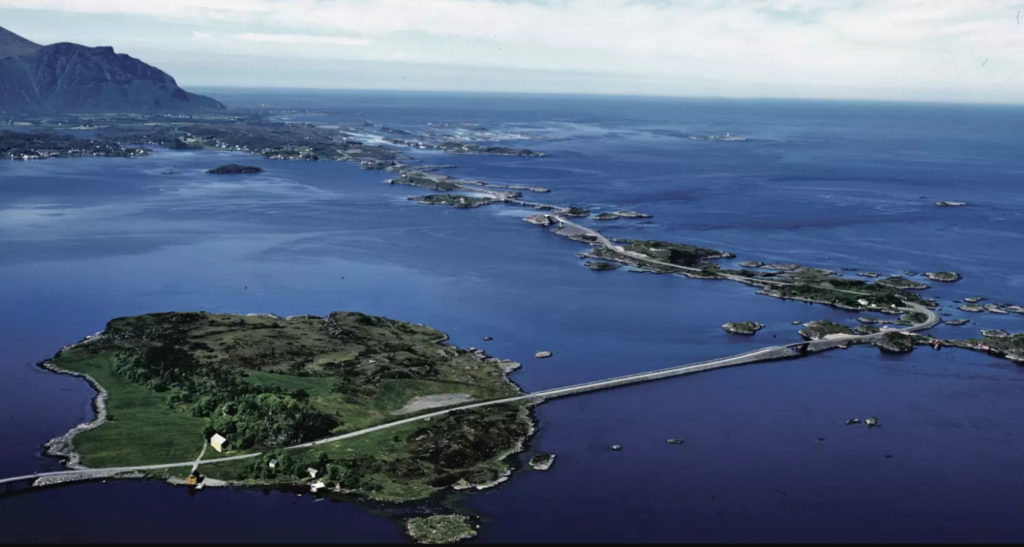
I’ve been fascinated by the Atlantic Road on Norway’s west coast since I learned about it a few years ago. It looked like a real life rollercoaster ride hopping from island to island along the outermost edge of the coast. Bad weather seemed to make it even more extraordinary.

Photo credit: www.visitnorway.com

The road is one of Norway’s 18 official national tourist routes. It opened in 1989, and in 2005, it was voted Norway’s “Engineering Feat of the Century”. It is built on several small islands, skerries, and landfills and is spanned by seven bridges. Many consider it one of the world’s most beautiful drives as well.

We came at it from the north via Kristiansund after a visit to Trondheim. We drove through Atlantic Ocean Tunnel (an undersea tunnel about 3.5 miles long) from Kristiansund to the island of Averøy and made our way along Route 64 with a final destination of Molde.

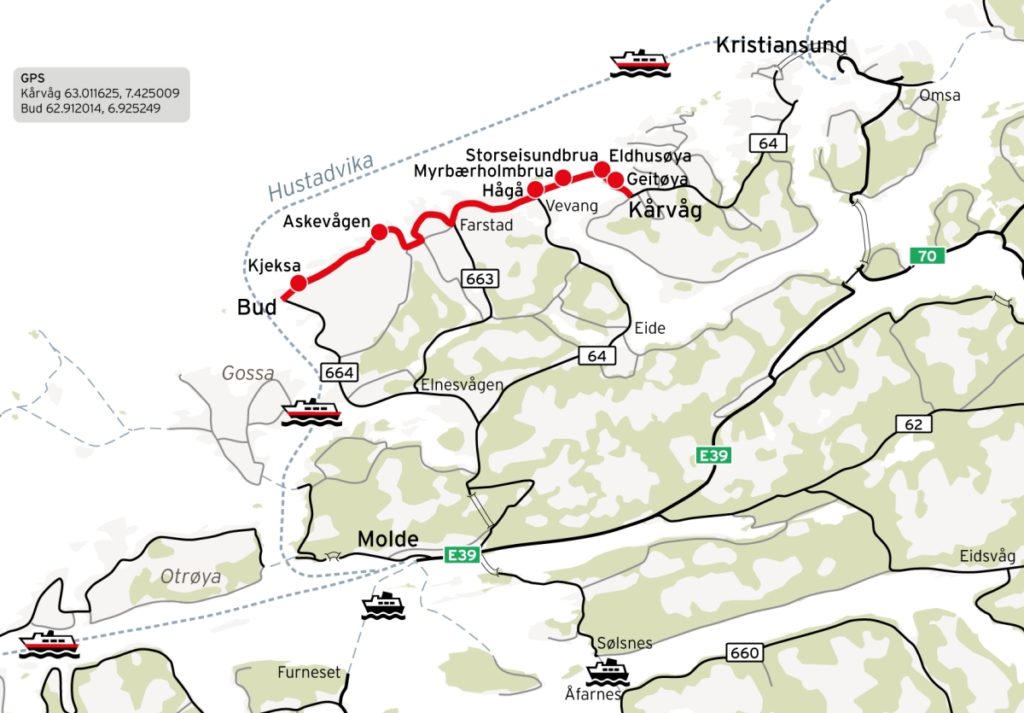
A quick Internet search of the Atlantic Road will tell you it is a 5-mile stretch between Kårvåg and Vevang along Route 64 (WikipediaGoogle Maps, various articles). However, as you can see on the official site of National Tourist Routes in Norway, the full route is actually about 22 miles and goes all the way to Bud from Kårvåg on a series of smaller roads (Roads 64/242/663/238/235). The most dramatic stretch, however, is probably the 5-mile section between Kårvåg and Vevang.

Due to time constraints, we were unfortunately only able to drive the 5-mile stretch. Bad weather during our stay in Trondheim meant we had to use the morning of our departure for some must-see sightseeing and so we got on the road much later than planned. Also, we were delayed by an unexpected ferry ride which added some down time to our drive.

We didn’t get to the start of the Atlantic Road until 6:30PM! Yes, it stays light late during summertime, but we still had to get to our hotel in Molde that day and the kids could only handle so much in a day. And our stomachs were getting hungry for dinner as well.

For us, the weather was neither good nor bad. It was cloudy and drizzled on and off. In one way, that was good because it allowed us to get out of the car without getting soaked. But, on the other hand, a beautiful evening sun and clear skies would have added greatly to our enjoyment of the area.

Despite the constrained time and lackluster weather, it was an interesting experience to drive along the Atlantic Road and I’m glad we went out of our way to do it, but I was a little underwhelmed and feel it merits a revisit. Part of the reason I felt a little underwhelmed was that 5 miles is a very short stretch after 4 ½ hours of driving from Trondheim. Had we had time to drive and explore the full route I’m sure we would have felt it much more worthwhile.

The family along hiking path on Eldhusøya with Storseisundbrua in background

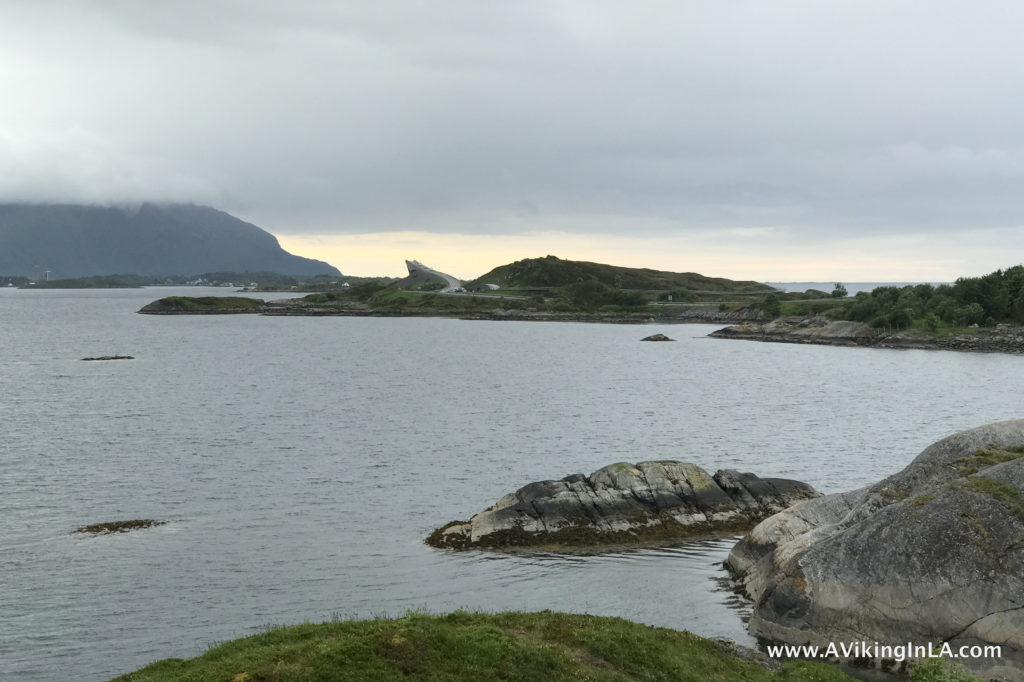
For us, the highlights were a short walk around the island of Eldhusøya and the drive over the main bridge Storseisundbrua. The island of Eldhusøya has an elevated path that goes around the island and provides views of the open ocean beyond. Along the path, there is a memorial to those lost at sea (and even a geocache!). Storseisundbrua is the longest bridge on the route and the route’s symbol. As you hit to crest of the bridge, you get a wonderful view of the road and the many little islands ahead. Too bad there wasn’t a stopping point there. Another interesting bridge we crossed was Myrbærholmbrua. It has specially built fishing walkways on either side. Had we had more time I would have liked to park and walk along them to see what kind of fish they were pulling in.

At the top of Storseisundbrua with a view of road and small islands ahead

The rest of the tourist route after we turned off for Molde seems to have some interesting attractions as well: Hågå with the broken-looking serpent-like marble sculpture called Columna Transatlantica, Askevågen at the end of the breakwater with glass walls for protection against the weather and spray, and Kjeksa with paths and steps leading down to the edge of the sea. They all seem worthy of visits. (Photo credits for images below: Nasjonale turistveger)

Once back in Los Angeles, my aunt shared with me a Norwegian article and video from Møre og Romsdal Reiseliv’s website describing seven “fresh experiences” you should make time for if you’re visiting the Atlantic Road.

As seen in the video, they recommend making time for the following activities:

  1. Float 550 meter around Eldhusøya (walk the elevated path)
  2. Go deep sea fishing with an expert (or fish off the walkways on the bridges)
  3. Visit the coastal town of Håholmen (and eat clipfish and experience Viking culture)
  4. See the artwork Columna Transatlantica
  5. Bike or hike the coastal trail at Farstad
  6. Windsurf or kitesurf on Farstadstranda
  7. Hike to the top of Stemshesten for an alternate view of Atlantic Road

One of those experiences, the Eldhusøya visit, we did have a chance to do, and others would not have been appropriate for our family, but I would have loved the opportunity to visit Håholmen, hike the coastal trail at Farstad, and see Columna Transatlantica with our own eyes (does it really look like toothpaste as my kids believe?). Those activities are on my list for next time.

My tips for travelers headed to the Atlantic Road – make sure you have lots of time to enjoy and explore and plan to drive the whole 22-mile route. If I have the opportunity to return to the area, driving the whole route with time to spare will be top priority. I would even consider bookending my visit with nights in Kristiansund and Molde (or maybe even on Håholmen) so that I could have a whole day along the route. The Atlantic Road deserves so much more time than we were able to give it, but I really enjoyed the introduction to it.

What I’ve Been Reading Lately: June 2017

I’m joining Modern Mrs Darcy’s Quick Lit link-up where readers share short and sweet reviews of what they’ve been reading lately. It’s been two months since I last shared what I’ve been reading lately so I’ve had a chance to accumulate a few titles. Continue reading

The New & Less Traveled Oslo

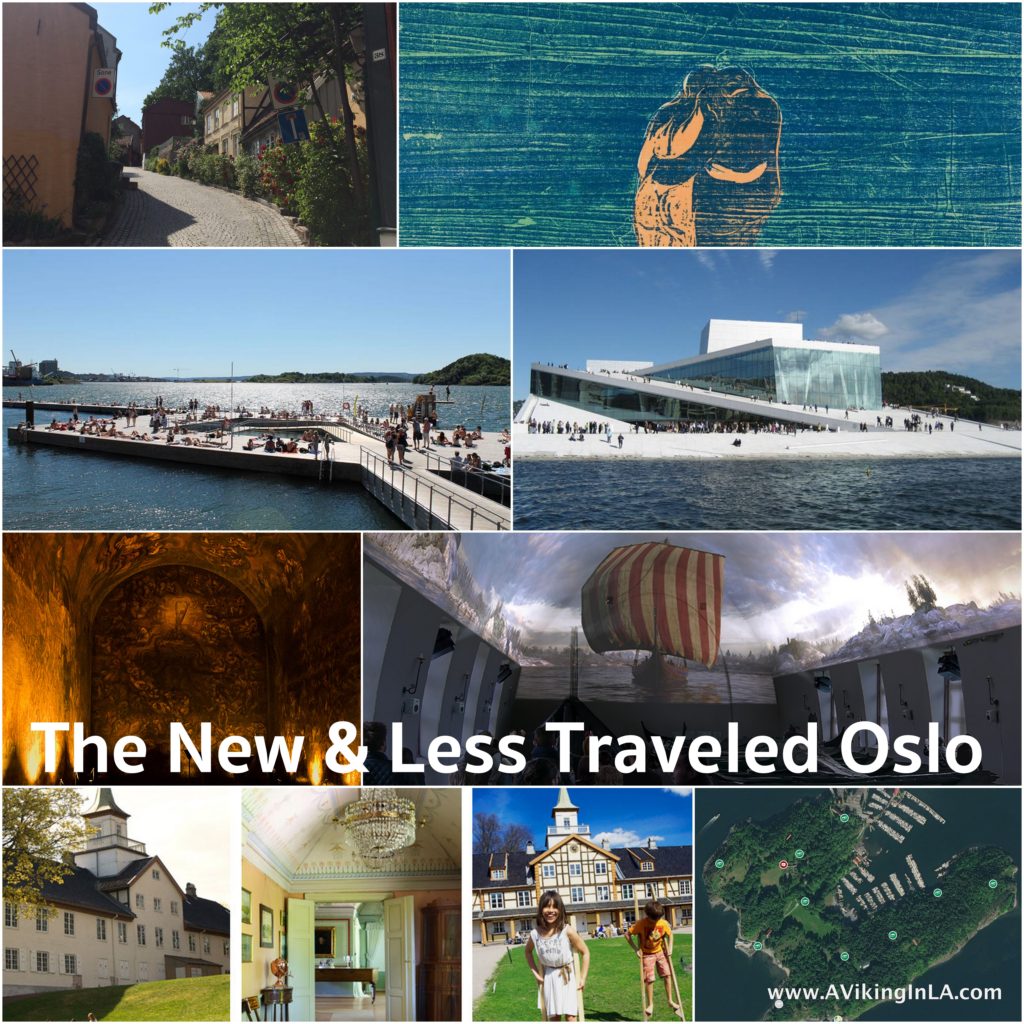
new and less traveled sightseeing in OsloAre you headed to Oslo this summer, and maybe you’re looking for something besides the normal tourist sights? Here are some newer sights and hidden gems to consider.

Harbor Promenade – Havnepromenade

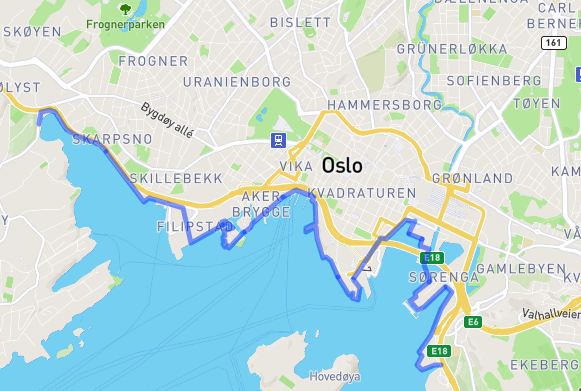
Oslo has a very new harbor promenade to explore. It runs 9 kilometers (about 5.5 miles) along the waterfront and hits many of the main sights of Oslo including Tjuvholmen and Aker Brygge, the inner harbor with City Hall and Akershus Fortress, and the Opera House.

I look forward to exploring this route by bike with the family. I may finally have a chance to get a close-up look at the Opera House with its dramatic architectural features. I also hope to include a swim at Sørenga Seawater Pool and a meal at Vippa (a huge warehouse recently named one of the “10 hottest new restaurants in Oslo” according to eater.com).

Hovedøya

A few years ago, a cousin of mine recommended a visit to Hovedøya, an island a short ferry ride from the city center known for its beaches, forests, and cultural heritage sights. There you can explore the ruins of a Cistercian monastery from 1147. In 1532, the monastery was pillaged and burned down, and the ruins weren’t excavated until 1840’s. You can also see two canon batteries from 1808 and two gunpowder depots from when the island belonged to the Norwegian army. It would be a nice excursion on a day with beautiful weather. Bring swim gear and a picnic (or eat at one of the cafes) and spend the day exploring. It also has plenty of geocaching opportunities (see map above with all the geocaches!) which is always a fun addition to an outing.

Museum of Oslo

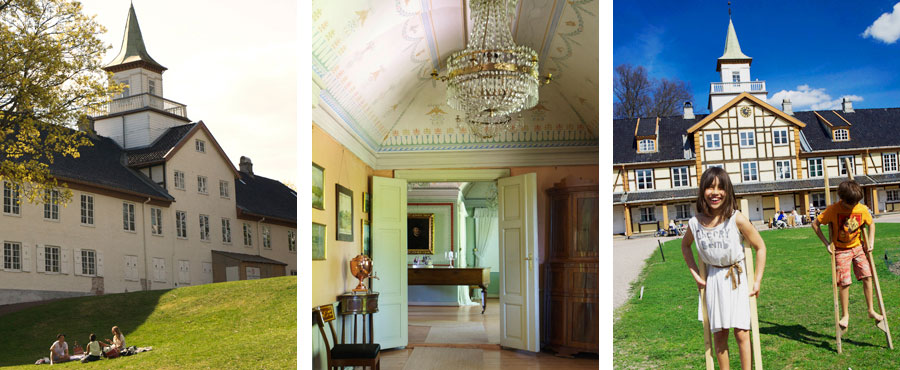
Museum of Oslo is another museum I’d like to take the kids to. It’s located right in Frognerparken which makes it a convenient bike ride from my parents’ home. It presents the city’s history through models, paintings, and photographs. The museum’s exhibitions are mainly in Norwegian, but a free audioguide of “1,000 years in 20 minutes” is available in English, French, German, Somali, Punjabi, Polish, and Arabic as well as Norwegian.

What piqued my interest in bringing the kids was that the museum offers a special family activity called City Detectives (recommended for kids age 5 to 12). It’s an augmented reality app that allows visitors to get a glimpse of Oslo’s past. The goal is to find 10 historical stations in the exhibition “OsLove – City History for Beginners”. With the app, participants visit the 2-bedroom apartment of a big family, experience the power of Aker River, and see how the main street of Karl Johan has changed over time. The app is only available on site. You can borrow ipods or download the app to your own Apple device. You do not need to know Norwegian to use the app.

Emanuel Vigeland Mausoleum

I learned about Emanuel Vigeland Mausoleum from the book Atlas Obscura: An Explorer’s Guide to the World’s Hidden Wonders. We are certainly familiar with the work of his brother Gustav Vigeland whose bronze and granite sculptures are on display in Frognerparken, but I did not know about Emanuel.

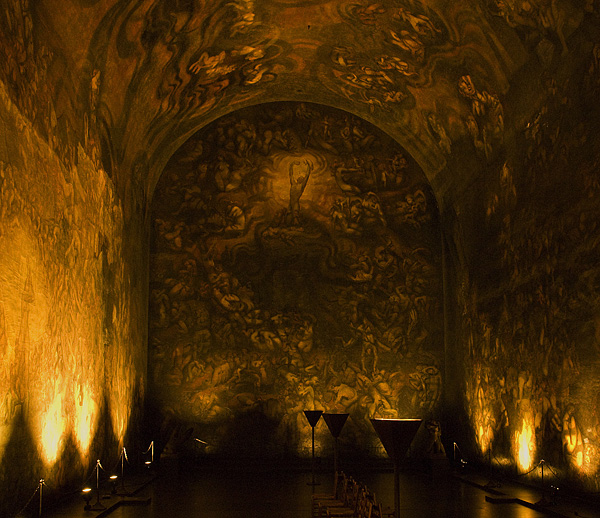
The mausoleum is part of Emanuel Vigeland Museum. The museum’s main attraction is a dark, barrel-vaulted room, completely covered with fresco paintings. According to Atlas Obscura, “entering the mausoleum is a solemn, even haunting, experience. Even the quietest footstep echoes across the barrel-vaulted ceiling for up to 14 seconds. A flashlight is needed to reveal the room’s dark, painted walls.” I think this “hidden wonder” is best explored without kids due to the paintings that show “life from conception till death, in dramatic and often explicitly erotic scenes.” (Note: The museum is only open to the public on Sundays. Summer hours are May 15 through September 15, 12pm to 5pm.)

Damstredet & Telthusbakken Area

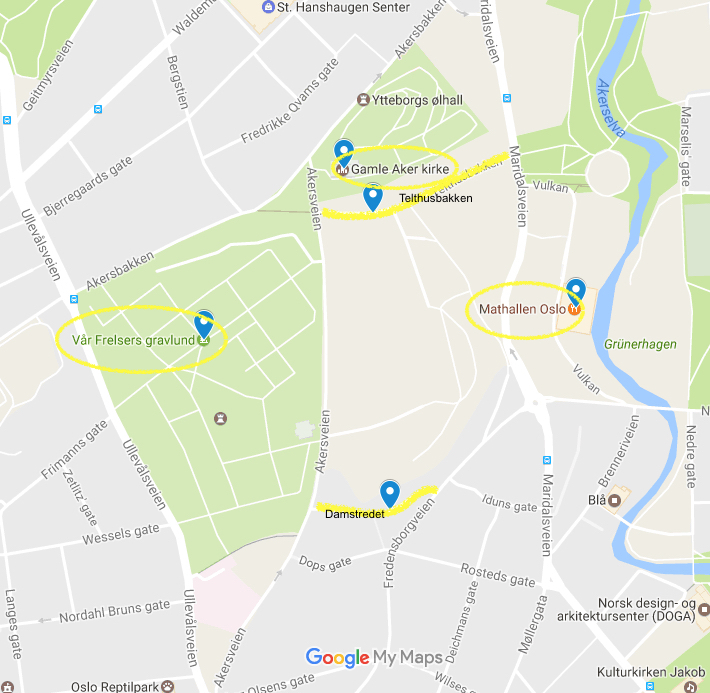
Damstredet and Telthusbakken are two roads known for their well-preserved and inhabited wooden houses built in the late 1700s and the 1800s. They are located near each other in the St. Hanshaugen/Gamle Aker area in central Oslo. There are other sights in the area as well, so a visit to the area can make a worthwhile self-guided walking tour. Very nearby is the medieval church Gamle Aker kirke (Old Aker Church), oldest building in Oslo, as well as Vår Frelsers Gravlund, the cemetery where writer Henrik Ibsen and painter Edvard Munch are buried. This excursion is easily combined with visit to nearby Mathallen, an interesting food court with specialty shops and cafés. And while at Mathallen, you can see if you can spot the Vulkan Bee Garden, which is two huge beehives on the rooftop between Mathallen and Dansens Hus next door.

Los Angeles Culture Challenge: Summer 2017 Events

Summer is the perfect time to explore and take advantage of all that Los Angeles has to offer. This edition of the Culture Challenge shares events happening throughout the summer. You’ll find special one-time events, ongoing year-round events that continue through the summer, and unique programs just happening during the summer.

Make a pact to visit a new area of Los Angeles or participate in a new activity—a cultural art project, a concert in a special outdoor setting, a festival celebrating a unique culture, or a bike ride exploring a new part of Los Angeles, just to mention a few options. The experience will open your eyes to the richness of where we live. You’ll be amazed at what’s available to us.

How will you explore the richness of Los Angeles this summer?

* SPECIAL EVENTS THIS SUMMER *

Family Festival, Getty Center, Saturday, June 3. Enjoy a day of celebration and discovery for the whole family inspired by magnificent historical scenes on view in the exhibition Eyewitness Views: Making History in Eighteenth-Century Europe, featuring performances, storytelling, and art-making workshops.

17th Annual LA River Ride, Autry Center in Griffith Park, Sunday, June 4. What better way to explore the city we live in than by bike. Join over 2,000 other riders and enjoy a great day of bicycling fun, exploration, a post-ride expo, a raffle, live music, and more. 7 great rides: 100-mile, 70-mile, 50-mile, 36-mile, 25-mile, 15-mile Family Ride, plus a 2-mile Kids’ Ride + Festival. All participants receive a t-shirt, goodie bag, and finisher’s medal. Kids 12 and under ride for free for all rides. All proceeds benefit the work of the Los Angeles County Bicycle Coalition, the only non-profit organization working to make all communities in L.A. County healthy, safe, and fun places to ride bikes.

Kids in the Courtyard: Decoding Stories!, Fowler Museum at UCLA, Westwood, Sunday, June 4, 1:00 to 4:00 p.m. The Moche peoples of ancient Peru (100-800 C.E) portrayed complex scenes on painted vessels, depicting everything from daily life to rituals and legends. The scenes were created with such detail that archaeologists today can decode these images to learn about how Moche people lived. Come out and be an archaeologist for a day! Create your own coded picture language and see if others can decode your secret messages.

Irish Fair & Music Fest, El Dorado Park, Long Beach, Saturday, June 10, & Sunday, June 11. This is the largest such festival west of the Mississippi, and it has been around Southern California for more than 40 years. There will be many Irish bands, including the well-known Fenians. For the young folk, there will be a Leprechaun Village with rides, storytelling, and a Freckle Face competition. You are invited to join or just watch the daily St. Paddy parades. Also included in the entertainment line-up is a sheep herding exhibition. And of course, there will be plenty of Irish food and beverages.

CicLAvia – Glendale Meets Atwater Village, Sunday, June 11. Los Angeles welcomes a brand new CicLAvia route in June. Glendale and Atwater Village will host the country’s largest open streets event. Streets will be closed to cars and open for cyclists, pedestrians, runners and skaters to use as a recreational space. You will enjoy the sights, music, food, and culture that make LA such a vibrant city.

LA Film Festival, ArcLight Cinemas, Culver City, June 14-22. The LA Film Festival is a premier platform for new works from emerging and established independent storytellers with unique voices and innovative visions. Index of films by interest include the following: African Diaspora, Directors of Color, LA Stories, Latino/Latin America, LGBTQ+, Native American/Islander, Politics/Social Awareness, plus more. Most screenings and events take place at ArcLight Culver City, with additional screenings and events at venues around Los Angeles.

Kids in the Courtyard: Miniature Painting, Fowler Museum at UCLA, Westwood, Sunday, June 18, 1:00 to 4:00 p.m. Miniature paintings illustrating books and manuscripts are an integral part of western Indian art traditions. Create your own painting on shrink plastic and watch it miniaturize before your eyes! Be sure to catch the miniature paintings and sparking silver jewelry in the Enduring Splendor: Jewelry of India’s Thar Desert exhibition.

31th Annual Long Beach Bayou Festival, Rainbow Lagoon Park, Long Beach, Saturday, June 24, & Sunday, June 25. Experience the Bayou with this two-day family festival featuring authentic Cajun and Creole food, cultural music, dance lessons, crawfish eating contests, a children’s corner with arts and crafts and other activities, and a Mardi Gras parade. There will also be live performances at the Zydeco Stage, Blues Stage, and Children’s Stage.

Natsumatsuri Family Festival, Japanese American National Museum, Little Tokyo, Downtown LA, Saturday, August 13. Join JANM for their annual summer celebration featuring Japanese and Japanese American performances, crafts, and activities.

* ONGOING THROUGHOUT THE SUMMER *

The Undiscovered Chinatown Walking Tour, Downtown LA, first Saturday of each month, 10:30 a.m. – 1:00 p.m. Visit a temple, an herbal shop, art galleries, antique stores, and more when guided to the unique treasures–not to mention great bargains–to be found in Chinatown. Wear comfortable walking shoes and be prepared to wind your way through a myriad of alleyways, plaza stalls, and classical courtyards to discover the charm of L.A.’s Chinatown.

Little Tokyo Walking Tour, Japanese American National Museum, Downtown LA, last Saturday of each month, 10:15 a.m. – 12:15 p.m. Relive history and learn about present-day Little Tokyo with JANM docents. Comfortable walking shoes are recommended. Weather permitting. Buy tickets in advance. Cost is $12 members, $15 non-members. Museum admission is included. Limited to 20 participants.

Barnsdall Art Sundays, Junior Arts Center at Barnsdall Art Park, Hollywood/Los Feliz, every Sunday, 10:00 a.m. – 12:00 p.m. Every Sunday art instructors present a free art project featuring a different culture and media. All materials are provided. This summer explore Ancient Greece (June 4), China (June 11), Ancient Maya (June 18), India (June 25), USA (July 2), Tibet (July 9), India (July 16), and Kenya (July 23) through a variety of projects. See website for more details.

Andell Family Sundays, LACMA, Los Angeles, every Sunday, 12:30 p.m. to 3:30 p.m. Make, look, and talk about art at Andell Family Sundays! Drop in anytime between 12:30 and 3:30 pm. This weekly family event features artist-led workshops and friendly gallery tours and activities thematically based on special exhibitions and LACMA’s permanent collection. Each month features a different theme: June—Follow the Rainbow, July—Travel to Egypt, and August—Flower Tour.

Roman Holidays, The Getty Villa, Malibu, Saturdays & Sundays, ongoing until September 3. You won’t need a passport to travel back in time at the Roman Holidays celebration this summer. Discover the sights (and smells!) of ancient Rome, offer your prayers to Venus, read your future in a sheep’s liver, and enjoy live musical and comedy performances by the historically hysterical Troubadour Theater Company.

* SPECIAL SUMMER PROGRAMS *

Chinatown Summer Nights, Downtown LA, 1st Saturdays during summer months (7/1, 8/5, and 9/2), 5:00 p.m. – 12:00 a.m. Part food event, part summer party, Chinatown Summer Nights presents an exciting hot spot for Angelenos this summer. Taste the many culinary offerings of Chinatown and LA’s gourmet food trucks; sample the neighborhood’s wares; watch Chinese chefs perform cooking demonstrations; experience large-scale, outdoor video projections; take part in hands-on, Chinese cultural activities presented by local organizations and museums; sip on craft brews and dance in Central Plaza with 89.9 KCRW’s DJs!

Family Amphitheater Performances: All Around the World, Skirball Cultural Center, Saturdays & Sundays, July 1 – August 13. This year’s eclectic lineup of bands celebrates an array of musical styles—from the beats of Africa and Latin America to the American traditions of rockabilly and folk. Sing and dance along to music that inspired Paul Simon or was influenced by the legend himself. See website for full schedule.

Grand Performances, California Plaza, Downtown LA, June – August. Grand Performances bring artists and audiences together by thoughtfully curating an array of music, dance, film, and spoken word featuring great artists from around the globe and our very own streets of L.A. The summer series of free outdoor concerts celebrates our city’s rich diversity through performing arts at a stunning outdoor venue in Downtown LA. Some performances are more appropriate for families than others. See website for schedule of performances.

Ford Family Series: Big World Fun, Ford Amphitheatre, Hollywood, Saturday mornings, July & August. Music and dance events that represent the diverse cultural landscape of Southern California are presented on Saturday mornings in July and August in the outdoor amphitheatre. Performances are appropriate for children ages 4 to 12 and their families. Children are admitted free and adults pay $5. Come early to explore wild animals, get busy with craft activities, and grab a bite before the show. See website for schedule of performances and ticket information.

Feel free to add events for the summer months in the comments below. I also welcome feedback on any events you have attended. If you have suggestions about future events and celebrations to include in upcoming months, please email me the details. Thank you!

May 2017: Los Angeles Culture Challenge & Norwegian May 17th Celebrations

May is a big month for Norwegians worldwide. We celebrate our national day, Constitution Day, on May 17. On that day in 1814, Norway signed its constitution while it was still in a union with Sweden. The union with Sweden wasn’t dissolved until 1905. 17th of May celebrations worldwide are characterized by parades, traditional costumes, flags, and ice cream.

Here in Los Angeles, Norwegians can commemorate the day with a traditional celebration on the actual date of May 17 at the Norwegian Church in San Pedro (details here). Or, if making it to San Pedro midweek is tough, there’s the annual Sunday celebration at Nansen Field in Rolling Hills Estates on May 21 (see details below).

But there’s more to May than Norway’s national day. Angelenos can take advantage of many special events and activities featuring a variety of countries and cultures. How will you explore the richness of Los Angeles this month?

* WEEKEND OF MAY 6 & 7 *

Cinco de Mayo Celebration, El Pueblo de Los Angeles Historic Monument, Olvera Street, Downtown LA, Friday, 5/5, through Sunday, 5/7. Celebrate Mexico’s victory over French forces in Puebla, Mexico, in 1862, with popular and traditional music, exhibitor booths, dancing, and food. The party has been going on at this site every Cinco de Mayo for 140 years.

REDCAT International Children’s Film Festival, Walt Disney Concert Hall Complex, Downtown LA, Saturday, 5/6, & Sunday, 5/7. Don’t miss the last weekend of the annual REDCAT International Children’s Film Festival. It’s a weekend full of adventurous short-film programs that will appeal to moviegoers of all ages. Magical, exhilarating works made by acclaimed filmmakers and up-and-coming auteurs showcase work from around the globe — including Mexico, Brazil, Sweden, Russia, Taiwan, Belarus, Korea, The Netherlands, and Ukraine — to inspire the whole family. Festival highlights include the latest in both live action and animated shorts. See website for the schedule.

Cinco de Mayo Maracas, Bowers Museum, Santa Ana, Saturday, 5/6, & Sunday, 5/7, 10:00 a.m. – 4:00 pm. Maracas came from the indigenous tribes in Latin American. This fun instrument is now used in other parts of the world, including Mexico. They were originally made out of gourds, seeds, and pebbles. Modern maracas can be made out of wood, metal, and plastic. Come visit Bowers Museum’s Art Studio where children can designs their own maracas made out of recycled materials. Activity is included with Kidseum admission, $8 for everyone over the age of 2 years old.

The Undiscovered Chinatown Tour, Chinatown, Downtown LA, Saturday, 5/6, 10:30 a.m. – 1:00 p.m. Visit a temple, an herbal shop, art galleries, antique stores, and more! The 2 1/2 hour walking tour will take visitors to a number of off-the-beaten-track points of interest and will guide those interested in shopping to some of Chinatown’s best bargains and its trendiest shops. Wear comfortable walking shoes and be prepared to wind your way through a myriad of alleyways, plaza stalls, and classical courtyards to discover the charm of L.A’s Chinatown. You must RSVP as group size is limited. This tour is offered every first Saturday of the month.

Peru: Inca Feathered Textiles (Barnsdall Art Sundays), Junior Arts Center at Barnsdall Art Park, Hollywood/Los Feliz, Sunday, 5/7, 10:00 a.m. – 12:00 p.m. Come for a free family art workshop in a real art studio. All materials are provided. A different culture and media are featured each Sunday.

Celebrate Israel Festival, Cheviot Hills Recreation Center, West Los Angeles, Sunday, 5/7, 11:00 a.m. – 6:00 p.m. This year’s theme is Jerusalem: 50 Years of Reunification. The festival will give attendees the opportunity to visit various sites of Jerusalem, learn about the Old City, and travel back in time to learn about the history of Jerusalem. Attendees are encouraged to stop in the different pavilions throughout the park and meet the many organizations that will be offering hands–on projects and activities for the entire family. The day’s activities and events include musical performances, an artist marketplace, a kids zone and a teen area, an amusement park with rides, and food vendors serving traditional food and “street fare” (all 100% Kosher).

Eye on African Art (Andell Family Sundays), LACMA, Los Angeles, Sunday, 5/7, 12:30 p.m. – 3:30 p.m. Make, look, and talk about art at Andell Family Sundays. Drop in anytime between 12:30 and 3:30 p.m. This weekly family event features artist-led workshops and friendly gallery tours and activities thematically based on special exhibitions and LACMA’s permanent collection. This month, see outstanding masks, sculptures, and textiles, and learn about the symbolism and importance of vision and in African art in the exhibition The Inner Eye: Vision and Transcendence in African Arts. In workshops, make your own art inspired by the exhibition.

Renaissance Pleasure Faire, Santa Fe Dam Recreation Area, Irwindale, Saturdays & Sundays, ongoing until May 21. Travel back to the 16th century and experience the glory of life during the Renaissance era. The faire provides “a cornucopia of diversity where we are unified in inviting our guests to enjoy an environment we have created to escape from the stresses and demands of the modern day.” There will be artisans of all media, entertainment galore, food trucks and booths, games and rides (including pony and camel rides), a Kids Kingdom (with games, crafts, story-telling, song, shows, and characters), and a gnome quest!

Roman Holidays, The Getty Villa, Malibu, Saturdays & Sundays, ongoing until September 3. You won’t need a passport to travel back in time at the Roman Holidays celebration this spring and summer. Discover the sights (and smells!) of ancient Rome, offer your prayers to Venus, read your future in a sheep’s liver, and enjoy live musical and comedy performances by the historically hysterical Troubadour Theater Company.

* WEEKEND OF MAY 13 & 14 *

The Undiscovered Chinatown Tour, Chinatown, Downtown LA, Saturday, 5/13, 10:30 a.m. – 1:00 p.m. This is an additional tour held in conjunction with China Week. Visit a temple, an herbal shop, art galleries, antique stores, and more! The 2 1/2 hour walking tour will take visitors to a number of off-the-beaten-track points of interest and will guide those interested in shopping to some of Chinatown’s best bargains and its trendiest shops. Be prepared to wind your way through a myriad of alleyways, plaza stalls, and classical courtyards to discover the charm of L.A’s Chinatown. Wear comfortable walking shoes. You must RSVP as group size is limited.

Origami with Ruthie Kitagawa: Floral Cards, Japanese American National Museum, Little Tokyo, Downtown LA, Saturday, 5/13, 1:00 p.m. – 3:00 p.m. Learn to make a floral card just in time for Mother’s Day. Cost is $12 members, $15 non-members. Supplies and admission to museum are included. Limited to 10 participants. RSVP here.

Austria: Gustav Klimt Tree of Life Printmaking for Mother’s Day (Barnsdall Art Sundays), Junior Arts Center at Barnsdall Art Park, Hollywood/Los Feliz, Sunday, 5/14, 10:00 a.m. – 12:00 p.m. Come for a free family art workshop in a real art studio. All materials are provided. A different culture and media are featured each Sunday.

Eye on African Art (Andell Family Sundays), LACMA, Los Angeles, Sunday, 5/14, 12:30 p.m. – 3:30 p.m. Make, look, and talk about art at Andell Family Sundays. Drop in anytime between 12:30 and 3:30 p.m. This weekly family event features artist-led workshops and friendly gallery tours and activities thematically based on special exhibitions and LACMA’s permanent collection. This month, see outstanding masks, sculptures, and textiles, and learn about the symbolism and importance of vision and in African art in the exhibition The Inner Eye: Vision and Transcendence in African Arts. In workshops, make your own art inspired by the exhibition.

Family Jam: Storytelling with Dena Atlantic, Fowler Museum at UCLA, Westwood, Sunday, 5/14, 2:00 p.m. – 4:00 p.m. Storyteller Dena Atlantic will delight with interactive tales from around the world, including stories of the Trickster Spider Anansi from West Africa.

* WEEKEND OF MAY 20 & 21 *

Ancient Egypt: Cartouche and Painted Deities (Barnsdall Art Sundays), Junior Arts Center at Barnsdall Art Park, Hollywood/Los Feliz, Sunday, 5/21, 10:00 a.m. – 12:00 p.m. Come for a free family art workshop in a real art studio. All materials are provided. A different culture and media are featured each Sunday.

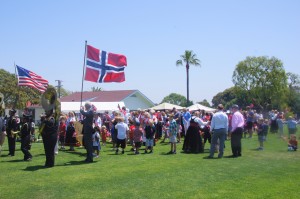
Norwegian Constitution Day FestivitiesParade time at Nansen Field, Nansen Field, Rolling Hills Estates, Sunday, 5/21, 11:00 a.m. This is a true Norwegian celebration. It is a relaxing, laid-back event on a huge open field. The field opens at 9:30am and the program kicks off at 10:50am with the hoisting of the American and Norwegian flags. Program highlights include a Norwegian 17th of May church service and a 17th of May speech. Then there’s a parade led by a marching band followed by the sale of traditional Norwegian 17th of May foods such as hot dogs, hamburgers, Solo, waffles, and ice cream. There are also vendor stalls with Norwegian goods and plenty of games and prizes for the kids. Read about our celebrations at Nansen Field last year here.
Eye on African Art (Andell Family Sundays), LACMA, Los Angeles, Sunday, 5/21, 12:30 p.m. – 3:30 p.m. Make, look, and talk about art at Andell Family Sundays. Drop in anytime between 12:30 and 3:30 p.m. This weekly family event features artist-led workshops and friendly gallery tours and activities thematically based on special exhibitions and LACMA’s permanent collection. This month, see outstanding masks, sculptures, and textiles, and learn about the symbolism and importance of vision and in African art in the exhibition The Inner Eye: Vision and Transcendence in African Arts. In workshops, make your own art inspired by the exhibition.

Kids in the Courtyard: African-Print Fashion Tomorrow!, Fowler Museum at UCLA, Sunday, 5/21, 1:00 p.m. – 4:00 p.m. Come for a day of activities celebrating the colorful and rich designs in African-Print Fashion Now! Families can create accessories from patches of African-print and enjoy family-focused guided tours of the exhibition. Finally, enjoy a showcase of artwork by fashion students in the high school arts program artworxLA, inspired by the exhibition.

* WEEKEND OF MAY 27 & 28 *
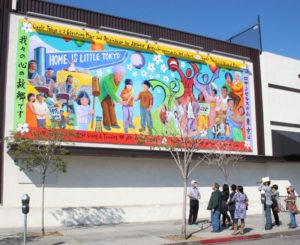
Little Tokyo Walking Tour, Japanese American National Museum, Downtown LA, Saturday, 5/27, 10:15 a.m. – 12:15 p.m. Relive history and learn about present-day Little Tokyo with JANM docents. Comfortable walking shoes are recommended. Weather permitting. Buy tickets in advance. RSVP here. Cost is $12 members, $15 non-members. Museum admission is included. Limited to 20 participants.

Scottish Fest, Orange County Fair & Event Center, Costa Mesa, Saturday, 5/27, & Sunday, 5/28. Enjoy a festival of Celtic entertainment and food. There will be competitions in Piping & Drumming, Highland Dancing, and Scottish Athletics as well as a full schedule of entertainment.


Valley Greek Festival, St. Nicholas Greek Orthodox Church, Northridge, Saturday, 5/27, Sunday, 5/28, & Monday, 5/29. Enjoy a cultural experience for all ages with live music, dancing, gourmet food, homemade pastries, cooking demonstrations, children’s activities, a Greek market, and a variety of shopping boutiques.

Eye on African Art (Andell Family Sundays), LACMA, Los Angeles, Sunday, 5/28, 12:30 p.m. – 3:30 p.m. Make, look, and talk about art at Andell Family Sundays. Drop in anytime between 12:30 and 3:30 p.m. This weekly family event features artist-led workshops and friendly gallery tours and activities thematically based on special exhibitions and LACMA’s permanent collection. This month, see outstanding masks, sculptures, and textiles, and learn about the symbolism and importance of vision and in African art in the exhibition The Inner Eye: Vision and Transcendence in African Arts. In workshops, make your own art inspired by the exhibition.

Feel free to add events for this month in the comments below. I also welcome feedback on any events you have attended. If you have suggestions about future events and celebrations to include in upcoming months, please email me the details. Thank you!

Los Angeles Times’ Festival of Books: Metro, Authors, and even some Geocaching

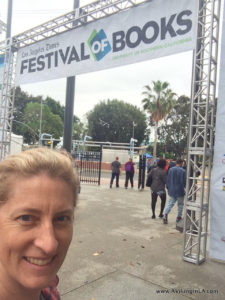
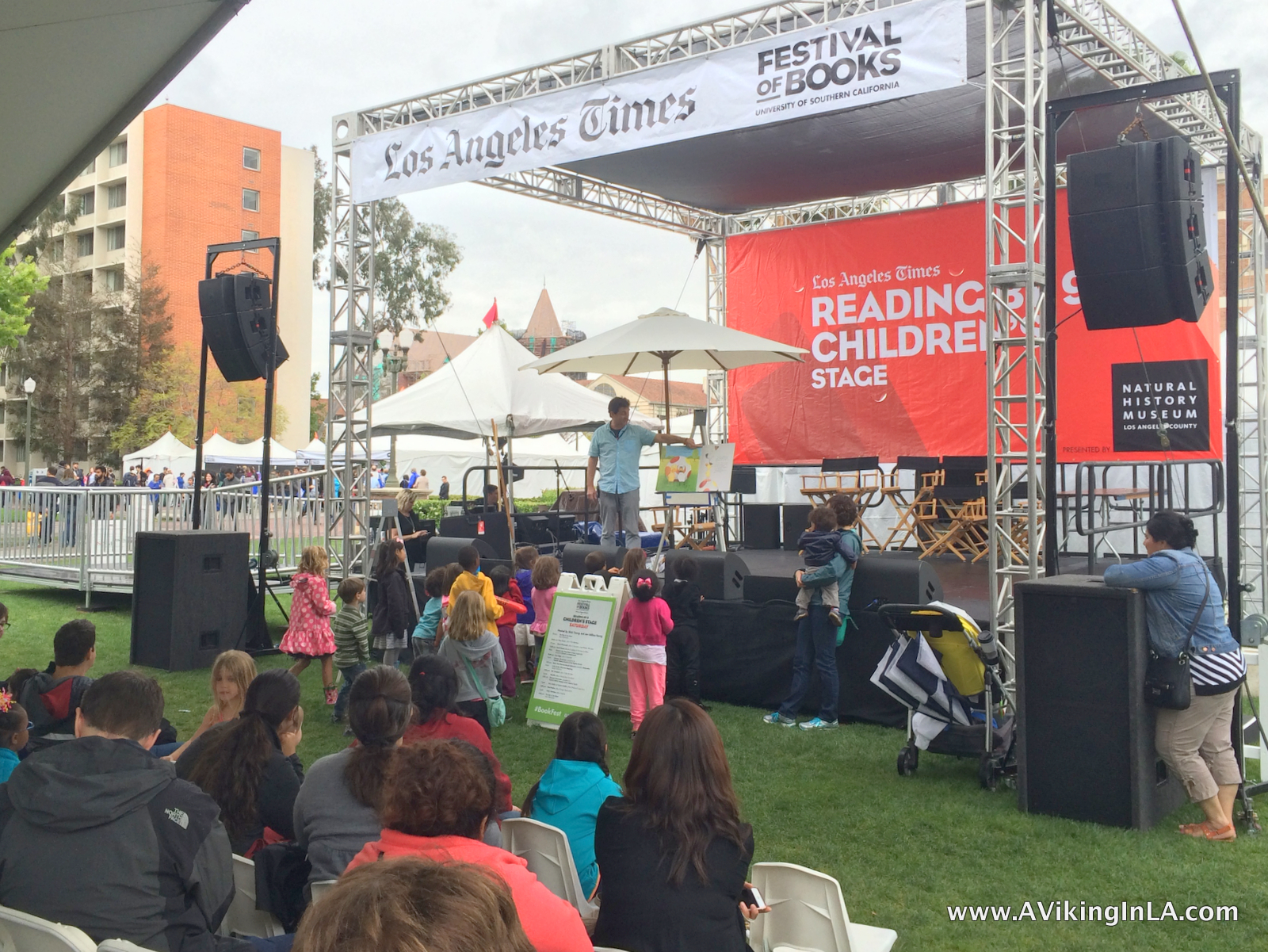
Last year, as luck would have it, I was able to go to the Los Angeles Times’ Festival of Books both days. On Saturday, I went alone and explored and lingered as I pleased. On Sunday, Sonny joined me for a more intentional day. It was the perfect combination of experiences.
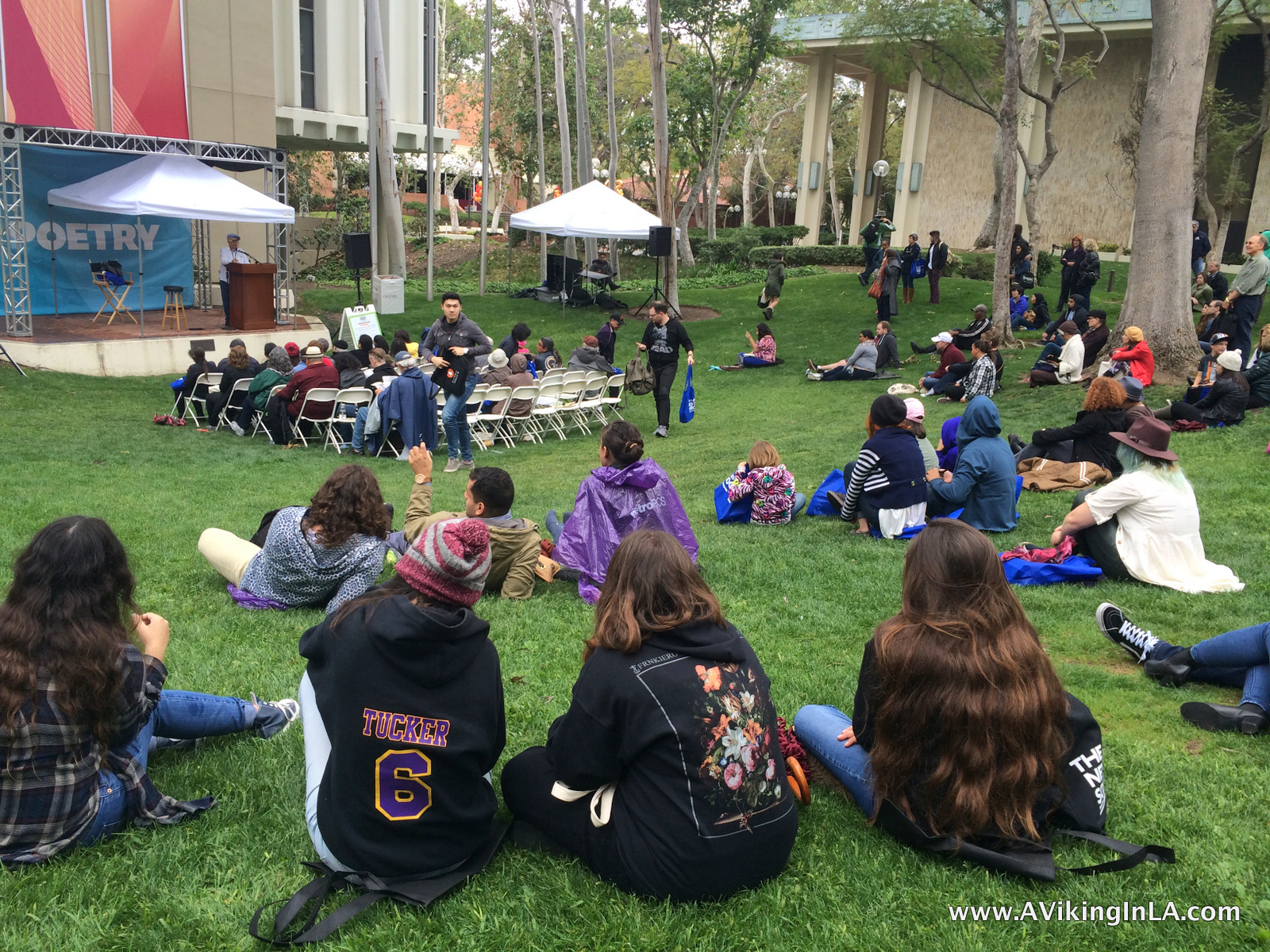
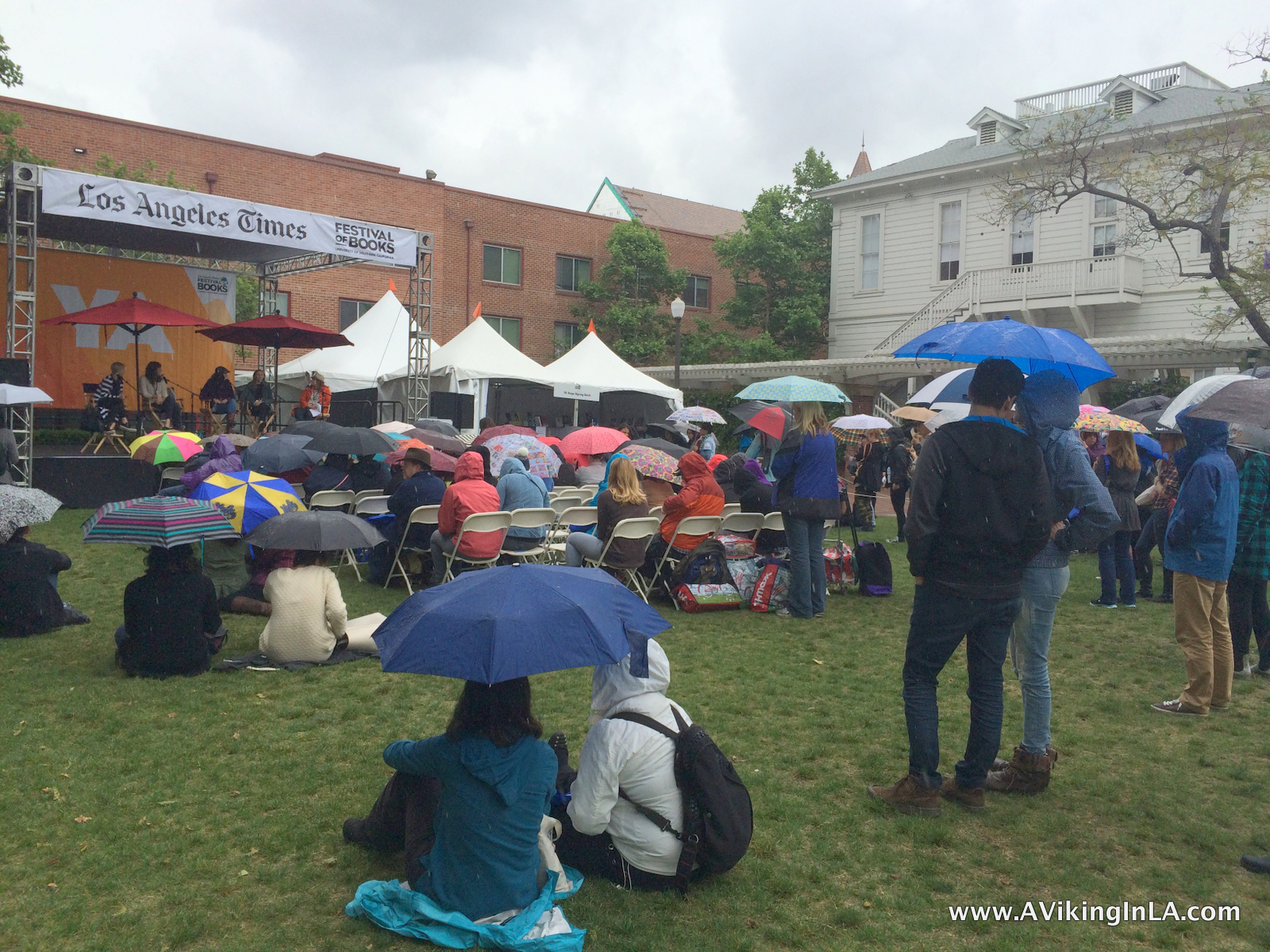
Saturday was a gray, dreary, rainy day, but I didn’t let that stop me. I donned my rain boots and rain jacket, packed an umbrella, and headed to our nearest Metro stop.

Taking the Metro made the excursion so easy. The closest stop was only a short drive away (and now it’s even closer with the Expo extension completed), and the stop at USC was right at the entrance to the festival. There were no hassles driving and finding my way and no expensive parking fees.

Due to the weather, the festival on Saturday wasn’t as lively as in previous years. There weren’t as many people roaming the grounds, and the booths were more closed up with plastic tarps on the sides. It did make maneuvering around more manageable, though. I easily browsed booths and listened in on stages where poets and authors spoke to more intimate audiences.

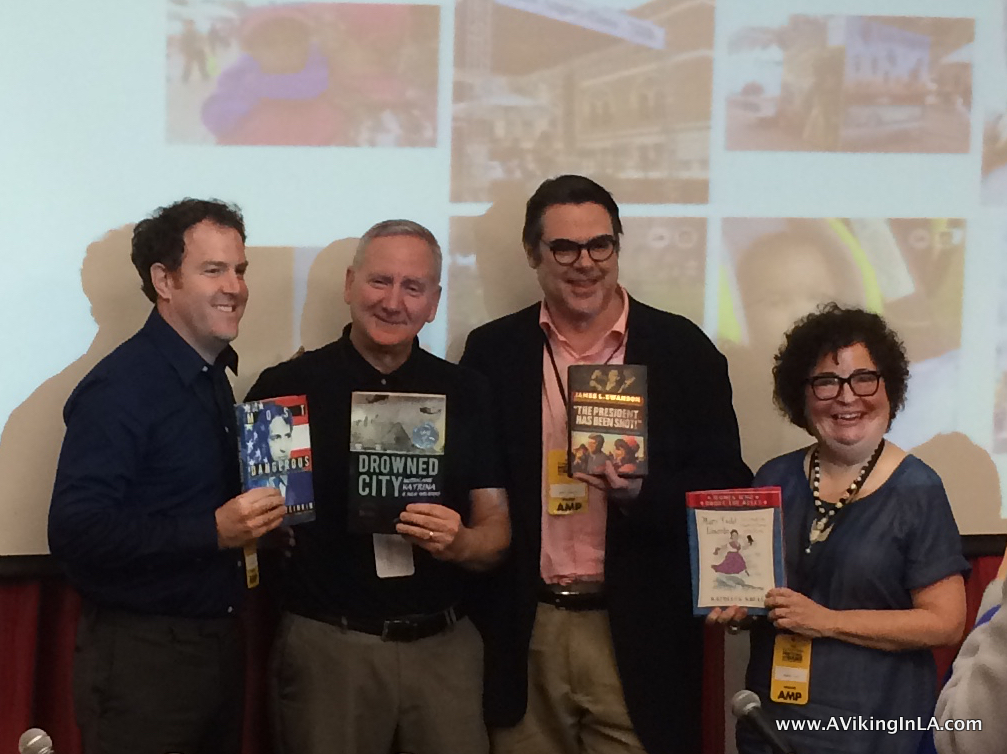
A highlight of the day was that I was able to get a ticket to a panel, also known as Conversations. I had never been to a Conversation. I had always been somewhat overwhelmed by the selection of offerings. Also, I’ve always been at the festival with family members who haven’t been interested in that aspect of it. This year, I just went to the ticket booth and looked to see what was still available in the next couple of hours. It limited my choices immensely and I was able to easily find something.

I actually had a choice of many open Conversations from which to choose. I selected a young adult nonfiction panel about bringing history to life for young adult readers. Sonny had recently read the young reader adaptations of the nonfiction books Unbroken by Laura Hillenbrand and Boys in the Boat by Daniel James Brown, which he had really enjoyed. I’m always on the lookout for possible interesting reads for him, and this panel seemed like a potential opportunity for that.

The panel was very interesting even though I wasn’t familiar with any of participants. Four authors of new non-fiction spoke about the process of bringing history to life for readers and then answered questions from the audience. I even bought a book by one of the panelists, Steve Sheinkin’s Most Dangerous: Daniel Ellsberg and the Secret History of the Vietnam War, and got it signed for Sonny for his birthday later in the month.

That evening I was on a high from my alone time at the festival. I was thrilled to have discovered how easy it was to go by Metro and how interesting panels could be. I looked to see if anything of interest was offered the next day. I found an available panel with middle grade authors, two of whom were favorites of Sonny’s, Stuart Gibbs (Spy School Series and FunJungle Series) and Pseudonymous Bosch (Secret Series and Bad Books Series). Sonny was interested but had his condition: he didn’t want to spend the whole day there. I reassured him it would only be a trip for the panel and food trucks and we’d be back home about 1 o’clock.

Sunday was a beautiful day, and I noticed a change already at the Metro stop. So many more people were headed to the festival. When we arrived at the festival, only about 30 minutes after opening, it was already very festive. Not only were more people there than the day before, but booths were more welcoming and music was playing.

The panel was a popular one with many young readers in attendance. The panelists were engaging and shared insights into their writing lives. It was interesting to match a face, a voice, and a personality with the names we’d seen on book covers for so long. I wished, however, that Q&A time at the end had been limited to children. Their questions were so much better than adults’ questions.
Afterwards we joined many other fans in line to have books signed. And just as promised, we checked out the food trucks and Sonny settled on some gelato.

Then came the unexpected addition to our festival visit. After Sonny and I had agreed on the plans for the morning, I had looked to see what geocaching possibilities were there. I had totally forgotten about that when I was there alone the day before. It turns out there were three geocaches within the festival grounds, and I secretly planned a route to include those spots.

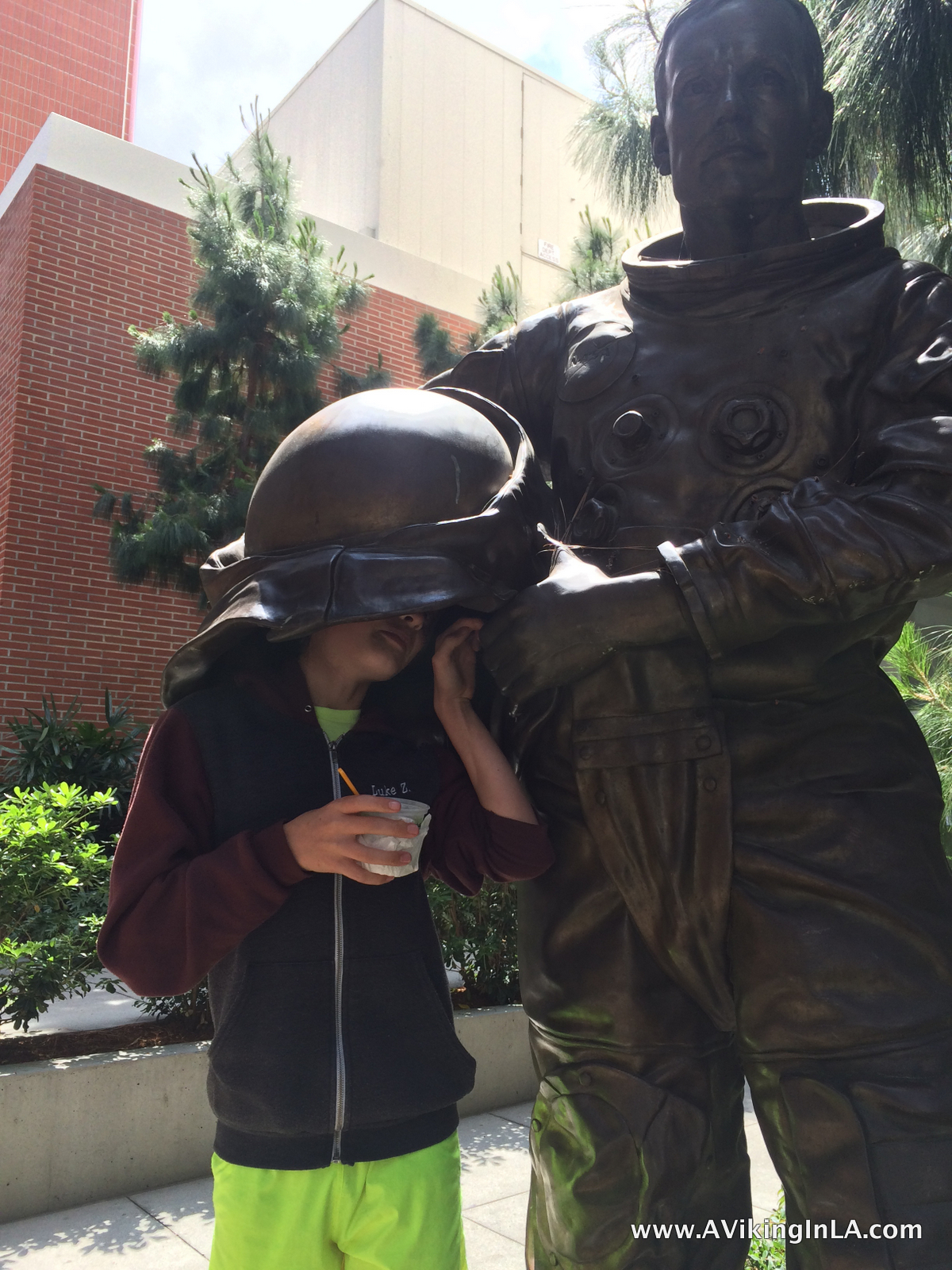
When Sonny heard about my geocaching hopes, he felt a little deceived. However, when it came down to it, he was eager to be the one to make the finds. He makes a good geocaching partner. We found one right in front of a security guard because no one thinks twice about a kid sticking his head up into a statue but an adult would have attracted attention.

A day alone and a morning with Sonny was the perfect way to experience the festival. I felt like I had a chance to take it all in – browse the booths, listen to authors on stage, attend panels, enjoy music performances, watch artists at work, and indulge in some treats from food trucks.

This year’s festival will take place the weekend of April 22 and 23, and once again, it will be at University of Southern California’s campus. The schedule can be found online, and you can reserve free tickets to indoor Conversations ($1 service fee applies to each ticket). A limited number of tickets for each Conversation will also be available at the festival ticketing booth each day — free of service charges — while supplies last. There are also plenty of outdoor Conversations on stages that do not require tickets. And admission to the whole festival is free. I highly recommend you take advantage of this LA event.

What I’ve Been Reading Lately: April 2017

I always enjoy hearing what people have been reading lately, so I thought I’d join Modern Mrs. Darcy’s latest Quick Lit link-up where readers share short and sweet reviews of what they’ve been reading lately.

In the past couple of months, I’ve read books with covers that lured me in, a non-fiction book to hopefully help me understand our most recent election, a book in anticipation of an author talk, and books that were not what I expected. Continue reading

Checked Off My California Bucket List: See the Poppies!

My wish to see the yearly California poppies finally came true. Every spring for years, when news of the upcoming poppy season and then pictures of the current bloom (some years better than others) would come out, I would yearn to see them in person. It wasn’t until we recently had a soccer tournament in Lancaster that I realized the poppy fields weren’t as far away as I had thought.

The Lancaster tournament was about a 75-minute drive north, and actually a beautiful drive once we got onto the Antelope Valley Freeway (Route 14). From Lancaster, Antelope Valley California Poppy Reserve was then only about 15 miles west. Our soccer tournament was too early in the season (end of February) to catch the poppies, but I knew then they were within reach.

We stayed in Los Angeles for Spring Break (first week of April), and I made a vow that we would see the poppies this year. The kids weren’t overly thrilled about the plan. They thought I should just be happy with the random poppies that had popped up around town along the roadsides. I powered through with my wish for the whole family to go, and as luck would have it, a friend of Sonny’s came along for the trip as well which was a nice distraction.

There had been news that poppy blooms were expected to be “moderate” this year and not the “jaw-dropping orange carpets” last seen in 2008 and 2010, but that didn’t stop interested people from making the trek. The park was advising visitors to come on weekdays instead of weekends due to the crowds and congested parking, so we headed to the reserve on a Thursday. The traffic cooperated and we were there in the minimum time anticipated. It was windy, as the park’s website had warned it often is, and cloudy, so we were grateful for sweatshirts we had brought along.

We began our visit at the interpretive center. It has an orientation video, some wildflower and wildlife exhibits, a gallery of botanical watercolor paintings, and a gift shop. Here I picked up a map of the trails. I also received one of the newly arrived park brochures that staff members were very excited to be able to hand out. I asked if they had a route to recommend, and of course they did, and then we were on our way.

Map from brochure by The Poppy Reserve/Mojave Desert Interpretive Association

The reserve consists of eight miles of trails through hills and fields of wildflowers with benches along way to enjoy the views. Our hike was a 3-mile loop on wide dirt paths with gentle to moderate slopes, nothing difficult at all. From the interpretive center, we headed to Kitanemuk Vista Point. Off in the distance, we saw fields of yellow and orange; and along the trail, we saw a wide variety of colorful wildflowers.

poppies and other wildflowers

The most amazing stretch of poppies was after the vista point and along the Antelope Trail Loop (between North and South trails). It was not a long stretch, but the poppies were close to the trail and abundant and beautiful. We felt lucky to have been guided to this particular area because it made the whole trip worth it.

The poppies weren’t as overall abundant and awe-inspiring as we were expecting, but I believe that was partly due to the weather that day. Since it was windy and cloudy and cool, all the poppies weren’t as open as they could be. Poppies curl up in cold weather.

At the reserve, there are strict rules to stay ON the paths and OUT of the poppy fields. Sadly, many people ignored or were unaware of those rules, and new paths had been created upon trampled flowers and grasses. In particular, I was deeply disturbed by two girls taking pictures of each other doing yoga poses in the field. For people who really want to traipse among the poppies, there’s a stretch along the main road leading to the entrance to the reserve where people can just park off the road and head onto land filled with poppies.

The California poppy was named California’s state flower in 1903, and coincidentally, April 6, the day we visited the reserve, is officially “California Poppy Day” (declared in 2010). “On California Poppy Day, all public schools and educational institutions are encouraged to conduct exercises honoring the California Poppy, including instruction about native plants, particularly the California Poppy, and the economic and aesthetic value of wildflowers; promoting responsible behavior toward our natural resources and a spirit of protection toward them; and emphasizing the value of natural resources and conservation of natural resources.”

Here’s some more interesting historical information about California’s state flower from the reserve’s brochure:

From brochure by The Poppy Reserve/Mojave Desert Interpretive Association

Staff members anticipate the bloom to possibly last until late April or early May depending on rain fall. Make sure to check Antelope Valley California Poppy Reserve’s website for bloom status updates before heading out or call Poppy Reserve Wildflower Hotline at
(661) 724-1180.

Ideally, while in Antelope Valley, I would have liked to have added a visit to Arthur B. Ripley Desert Woodland to our outing. The woodland is just seven miles west of Antelope Valley California Poppy Reserve. According to its website, it “protects and preserves an impressive stand of native Joshuas and junipers which once grew in great abundance throughout the valley.” Beautiful and interesting pictures can be seen on the Arthur B. Ripley Desert Woodland State Park Pinterest page. I’ll keep it mind for my next trip to see the poppies.

Have you seen the poppies?