The 2019 Scandinavian Reading Challenge is underway! Today I’m sharing books I’m thinking of reading for each of the prompts in the challenge.
I’m listing more than one book for each prompt. I want to give myself some choice depending on mood, availability, and book club reads and also give readers some ideas for their own reading. Even though a book may be listed under more than one prompt, I will only count it for one. That’s just my personal rule for this particular challenge. You do whatever works for you. (For other reading challenges, I may double up and count a book for more than one prompt.)
If you would still like to join, it’s not too late. It won’t be too late until the year is over. Just visit 2019 Scandinavian Reading Challenge and let me know in the comments there.
Do you need more ideas of books to read? Ask in the comments or send me an email and I’ll see what I can suggest. I’ve read many that would be good options.
Disclaimer: AVikingInLA.com is a participant in the Amazon Services LLC Associates Program, an affiliate advertising program designed to provide a means for sites to earn advertising fees by advertising and linking to amazon.com. Any and all click-thrus are much appreciated as they help bring revenue to keep this site going. Thank you!
Now, without further ado…
A book set in a Scandinavian capital:
- Stockholm, Sweden: Quicksand by Malin Persson Giolito (tr. Rachel Willson-Broyles)
- Oslo, Norway: Seven Days in August by Brit Bildøen (tr. Becky L. Crook)
- Copenhagen, Denmark: Mirror, Shoulder, Signal by Dorthe Nors (tr. Misha Hoekstra)
A Nordic Noir novel:
- The Legacy: A Thriller (Children’s House Book 1) by Yrsa Sigurdardottir (tr. from the Icelandic by Victoria Cribb)
- Blind Goddess (Hanne Wilhelmsen Book 1) by Anne Holt (tr. from the Norwegian by Tom Geddes)
- The Keeper of Lost Causes (The First Department Q Novel) by Jussi Adler-Olsen (tr. from the Danish by Lisa Hartford)
- The Redbreast by Jo Nesbø (tr. from the Norwegian by Don Bartlett)
- I’m Traveling Alone by Samuel Bjork (tr. from the Norwegian by Charlotte Barslund)
A Scandinavian book published in the last year (either in original language or in translation):
- Wait, Blink: A Novel by Gunnhild Øyehaug (tr. from the Norwegian by Kari Dickson) – June 2018
- The Boy at the Door by Alex Dahl
- Dødevaskeren (Dead Washer) by Sara Omar (Danish-Kurdish) – 2018 in Norwegian (not yet available in English)
A book by a non-native Scandinavian author:
- Demian Vitanza (Norwegian/Italian) – This Life or the Next: A Novel (tr. Tanya Thresher)
- Berit Ellingsen (Korean-Norwegian) – Not Dark Yet
- Sara Omar (Danish-Kurdish) – Dead Washer (not yet available in English)
A nonfiction book about Scandinavian culture:
- North Wild Kitchen: Home Cooking from the Heart of Norway by Nevada Berg
- There’s No Such Thing as Bad Weather by Linda Åkeson McGurk
A winner of the Nordic Council Literature Prize:
- Hotel Silence by Audur Ava Olafsdottir (tr. Brian FitzGibbon, Iceland, 2018)
- Days in the History of Silence by Merethe Lindstrom (tr. Anne Bruce, Norway, 2012)
- The Ice Palace by Tarjei Vesaas (tr. Elizabeth Rokkan, Norway, 1964)
- A list of Nordic Council Literature Prize winners available in English
A historical fiction book set in Scandinavia:
- Simon’s Family (aka Simon and the Oaks) by Marianne Fredriksson (tr. from the Swedish by Joan Tate)
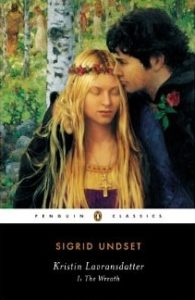
- Kristin Lavransdatter 2: The Wife by Sigrid Undset (tr. from the Norwegian by Tiina Nunnally)
A Scandinavian book recommended or gifted to you:
- Blå (Blue) by Maja Lunde (not yet available in English)
- En moderne familie (A Modern Family) by Helga Flatland (English translation coming April 13, 2019)
- Vær snill med dyrene (Be Kind to the Animals) by Monica Isakstuen (not yet available in English)
A Scandinavian book published before you were born:
- Kristin Lavransdatter 2: The Wife by Sigrid Undset (1921, tr. from the Norwegian by Tiina Nunnally)
- The Ice Palace by Tarjei Vesaas (1963, tr. from the Norwegian by Elizabeth Rokkan)
- Out of Africa by Isak Dinesen / Karen Blixen (1937)
A book written by a non-Scandinavian set in Scandinavia:
- Forty Days Without Shadow: An Arctic Thriller by Oliver Truc
- Norwegian by Night by Derek B. Miller
A Scandinavian book you’ve been meaning to read:
- The Bird Tribunal by Agnes Ravatn (tr. from the Norwegian by Rosie Hedger)
- Dina’s Book by Herbjorg Wassmo (tr. from the Norwegian by Nadia Christensen)
- Two Sisters: A Father, His Daughters, and Their Journey into the Syrian Jihad by Åsne Seierstad (tr. from the Norwegian by Seán Kinsella)
- Arv og miljø (Will and Testament) by Vigdis Hjorth (English translation coming September 10, 2019)
- Tante Ulrikkes vei (Our Street) by Zeshan Shakar (not yet available in English)
A book from a favorite or unread category from last year’s reading challenge:
- This one I’ll probably decide later in the year when I see what I’ve already read and what I still want to read, but I’m considering a crime novel by a female author, another book about Scandinavia during WWII, or an immigrant story.
If you’re participating in the challenge, I’d love to read in the comments what books you’re considering to read. And if you have suggestions for me, I’d love to hear those, too!
 I invite you to join the
 I needed an audiobook that I would quickly get absorbed in and would eagerly want to return to, and this one did the job. I came across the recommendation at Modern Mrs. Darcy’s post
 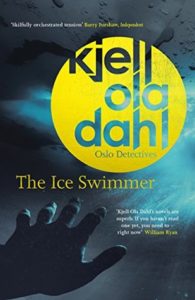 Kjell Ola Dahl is a new-to-me Norwegian crime writer, though he’s been writing since 1993. I jumped into this Oslo Detectives Series with book #6 and I don’t think it mattered that I hadn’t read the previous ones. I liked the setting of Oslo and the crime was interesting. However, I was not a fan of the female detective Lena Stigersand. I like strong, smart female characters, and Lena made some dumb decisions with both a new relationship and her work responsibilities. I almost did not finish the book, but I was over half way done and wanted to know the resolution. Also, I needed it for my Scandinavian Reading Challenge. (I do believe this is Lena’s first appearance so maybe previous books in the series are better.)
 I highly recommend this book for anyone interested in a little-known history event involving people willing to risk everything for the love of their country. This is a historical fiction book about the sabotage of a Nazi-occupied factory in Norway during World War II. A by-product of the factory was heavy water which the Germans needed to continue their atomic bomb work. A group of Norwegians were trained in England to disrupt those plans. This book was especially fun to read since we had visited the site of the factory this past summer. I could visualize the factory and the landscape around it, which plays a significant role in the missions. I was thrown off a little by the fictional characters who were added to the story (like the American!) but the author’s note at the end put those doubts to rest. My 14-year-old son read and enjoyed it, too.
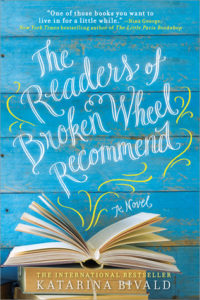 This was a fun and sweet read! It’s been on my radar for a long time (must have been the bookish title and cover), but I didn’t know until somewhat recently that it’s actually a Swedish book in translation. It’s about a young Swedish woman who goes to visit her elderly penpal in the USA. However, her penpal dies right before she arrives in Broken Wheel, Iowa. It’s a story about a dying small town, unlikely friendships, new beginnings, and the power of books and a bookstore to make a difference in people’s lives. The audiobook narrated by Fiona Hardingham and Lorelei King is also very good. I both listened to and read the book and highly recommend both versions.
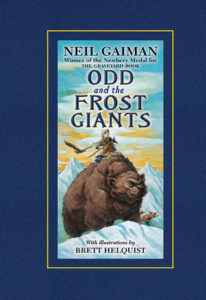 I had great plans to read Neil Gaiman’s
 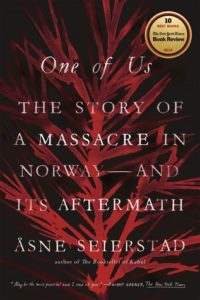 This author and book have been on my TBR list for a long time. When I saw that a film had been made based on it (Netflix original July 22 directed by Paul Greenglass), I prioritized it. This is not a quick and easy read. Not only is it 500+ pages but the subject matter is not very uplifting. (As of the writing of this post, I actually haven’t finished it yet, but I am more than 70% through it and determined to finish it and therefore counting it for my 2018 reading challenges.) I am alternating between the Norwegian edition and the English translation. Some parts, such as the political history of Norway, right-wing extremist Anders Breivik’s philosophy, and the bomb and weapon technicalities, are easier for me to read in English while the family narratives are fine to read in Norwegian. The book basically follows three people and their families before, during, and after July 22, 2011. Readers learn about Breivik’s childhood and what drove him to this horrible act. Of the many youth victims, readers get to know native Norwegian Simon Sæbø and recent Norwegian citizen Bano Rashid, a Kurdish refugee, and how their paths led to this political youth camp at Utøya. Stay tuned for more thoughts in another post once I finish the book and have watched the Netflix movie plus another July 22-themed movie which will be screened during the second weekend of




 World Cup season is the perfect time to make some literary connections with the countries playing! Lists have been published recommending books by authors from each of the World Cup countries. There have also been daily literary World Cup matches where participating countries’ books or authors have been matched against each other to see which book/author readers like best. Check out