Welcome, Fall! Even though it’s not officially fall yet, it still feels like that since students are returning to school. I wonder if any of you had the chance to enjoy any virtual programming over the summer or visit any of the special Nordic events happening around the country (some of which are still going on!).
Southern Californians, have you marked your calendars with the family friendly Vista Viking Festival happening this month? California’s premiere Viking festival and Norse heritage event takes place September 16 and 17 just north of San Diego. Visitors can mingle with Vikings and the Norse Gods at the living history Viking Village, play and do crafts in the Kids Village, splurge on Nordic goods at the marketplace, learn all things Norwegian with cultural demonstrations in the Heritage Hall, indulge in festive foods and drinks, enjoy live music and battle demonstrations, and even try your hand at axe throwing and hone your Viking skills in various competitions.

New this year, there will be an exclusive tasting event with Viking Spirits. Viking Spirits will be offering two flights of selected products, either 4 spirits or 4 wines. Each of the four daily seatings is limited to 25 participants so get your tickets now. These tickets are in addition to the Vista Viking Festival tickets.
For ticket and parking information to Vista Viking Festival, please visit Tickets and Parking. Save 10% with early bird pricing which ends September 7. Buy tickets here.
 Also happening this month is the Norwegian Church’s fundraiser Shrimp Party and Pier Dance on Saturday, September 16, in San Pedro. The Church will serve a 3-course meal along with drinks, and there will be live entertainment and good times, all in support of the Norwegian Church ($100 fee). If interested, reach out quickly as there are limited spots available.
Interested in joining other readers to discuss Nordic books or just want some book suggestions? Visit Online Nordic Book Club Meetings for details on reading selections and meeting dates for September.
What’s on your calendar for September?
SEPTEMBER EVENTS
Intro to Swedish with Jean Hanslin (Thursday, Sept. 7, 6:00 p.m. CT)
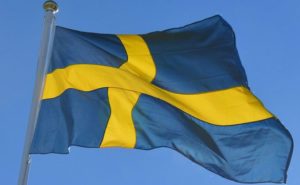 Are you curious about the Swedish language, but not ready yet to commit to a multi-date class? Are you looking for a quick and low-pressure way to get excited and prepare for an upcoming visit to Sweden? This two-hour introductory workshop taught by Jean Hanslin is the perfect way to get a feel for Swedish, pick up a bit of grammar, and learn how to pronounce some words as part of basic conversation.
Nordic Spirit Classics’ Second Friday Series—Sven Hedin: Great Explorer, Feckless Adventurer, or Self-Promoting Foreign Devil on the Silk Road? (Friday, Sept. 8, 7:30 p.m. PT, Free)
Join the Scandinavian American Cultural & Historical Foundation for a Second Friday presentation from the past Nordic Spirit Symposium, “The Nordic Explorers: From Polar Frontiers to the Silk Road”. Professor Emeritus Daniel C. Waugh, Dept. of History, University of Washington, Seattle, shared about Swedish explorer Sven Hedin and his exploits on the Silk Road. Participation is free, but you must be registered to receive the link.
Intro to Finnish with Joona Sundström (Sunday, Sept. 10, 12:45 p.m. CT)
 Are you curious about the Finnish language, but not ready yet to commit to a multi-date class? Are you looking for a quick and low-pressure way to get excited and prepare for an upcoming visit to Finland? This two-hour introductory workshop taught by Joona Sundström is the perfect way to get a feel for Finnish, pick up a bit of grammar, and learn how to pronounce some words as part of basic conversation.
Virtual Arctic Watercolor Class with Willow Heath (Tuesday, Sept. 12, 6:00 p.m. PT)
Celebrate the Arctic landscape with a watercolor project led by Willow Heath. Willow will give step-by-step instructions on creating your own masterpiece, inspired by the landscape of the Arctic Circle. See class description for required materials.
Webinar: Knitting Nordic Heroes (Saturday, Sept. 16, 1:00 p.m. CT, Free)
 From Merit Emstad who designed the first Selbu mitten to emigrants from the Nordic countries, knitters made an economic impact. These women helped give a sense of national pride, they hired women who at the time could not work out of the home, they set standards for the way we read knitting patterns, and they helped restore their economies. This talk with Steph Anderson will bring light to these heroes, some of whom are famous and some who had to fight to get credit for their work. Registration required for this free event.
Painting with Wool – Rosemaling (Sundays, Sept. 17 & 24, 1:00-3:00 p.m. CT)
 Try out needle felting to create a unique wool “painting” in the style of Scandinavian folk art! Students will explore the magic of needle felting to recreate a motif inspired by rosemaled designs on a flat felt base. To begin, students will learn how to stretch a felt backing onto an embroidery hoop, then use needle felting techniques to transform a beautiful array of hand-dyed roving from the instructor Laura Berlage’s own sheep. Kits ($33 value) are included in the class fee. Each kit includes felt backing, wool, and needles.
Dr. Jenni Haukio and Eliza Reid – the First Ladies of Finland and Iceland – with Neil Gaiman (Wednesday, Sept. 20, 6:00 p.m. ET, Free)
 Dr. Jenni Haukio and Eliza Reid, the First Ladies of Finland and Iceland, engage in a talk with bestselling author Neil Gaiman exploring the globally captivating traditions and themes of Nordic literature, rooted in a rich cultural heritage. Notable authors in their own right, Dr. Jenni Haukio and Ms. Eliza Reid have published a number of titles in the past years on a variety of themes, including their multifaceted roles as First Ladies of their respective countries. In this conversation with fellow author and master storyteller Neil Gaiman, Dr. Haukio and Ms. Reid reflect on how literary storytelling has historically shaped the national identities of the two Nordic countries and continues to work as an essential tool in amplifying equality and democracy in contemporary societies. A livestream of the event will be available on this NYPL event page. To receive an email reminder shortly in advance of the event, please be sure to register.
ASI Demo: Baking Norwegian Skoleboller with Kristi Bissell (Thursday, Sept. 21, 1:00-2:00 p.m. CT)
 Get ready for the new school year with a favorite Norwegian baked good, the skolebolle, or Norwegian School Bun! Of course, this vanilla custard flavored bun is a treat for all ages. Kristi Bissell will walk students through the cardamom flavored yeasted dough, the vanilla custard, and the rising and baking process. This lovely bake is sure to be a fall favorite for young and old alike, and students will be ready to tackle the recipe at home after this demo! This class is designed as a demonstration, so students can watch the entire process and ask questions before tackling the recipe at home at a later date.
Intro to North Sámi (Sunday, Sept. 24, 2:00-4:00 p.m. CT)
 Are you curious about the Sámi language and culture? Are you looking for a quick and low-pressure way to get excited and prepare for an upcoming visit to the north of Finland, Sweden, or Norway? This two-hour introductory workshop taught by Áila O’Loughlin is the perfect way to learn some history of the nine living dialects of Sápmi, get a feel for North Sámi, pick up a bit of grammar and learn how to pronounce some words as part of basic greetings. Families welcome!
Webinar: Kayaking the Lofoten Islands: Norway’s Craggy Crown Jewels (Wednesday, Sept. 27, 7:00-8:00 p.m. CT, Free)
 The Lofoten Islands are a surreal seascape of soaring, snow-speckled peaks rising steeply from deep fjords, white sand beaches, and aquamarine bays. Amidst this natural splendor are historic fishing villages, small cities, and picturesque farms – all bathed in 24-hour daylight during summer months and forever changing in the moody weather of the islands’ arctic location. It’s a kayaker’s dream destination. Dan York, a lifetime paddler and traveler, will share images and stories from two kayaking expeditions he has led to these magical islands, the first in 2017 and the second in 2023. Registration required for this free event.
Rosemaling in the Os Style: Scrolled Box (Sept. 28-Oct. 1, 1:00-4:00 p.m. CT)
 In this 4-day class, students will be painting a modern version of Os boxes, which can be used for all sorts of treasures. The Os style of rosemaling developed in the west coast of Norway about 1875. Annanias Tweit perfected this style and created a workshop at his farm where he and his apprentices painted tiner, sending baskets, trays, chairs, ale bowls, and delightful small boxes in the bright Os Style. They were sold in the Husflidens of Bergen and even now you can find small antique boxes from that period. A complete kit of supplies shipped to your home (a $105 value) containing paints, brushes, the wooden box, and sandpaper is included in the cost of enrollment. Enrollment Deadline: September 14, 2023
LOOKING AHEAD TO OCTOBER
(Enrollment deadlines are in September; spots still available as of publication date.)
Scandinavian Loom Beading: Green Bookmark, Level 1 (Four Fridays, Oct. 6-27, 2:00-4:00 p.m. CT)
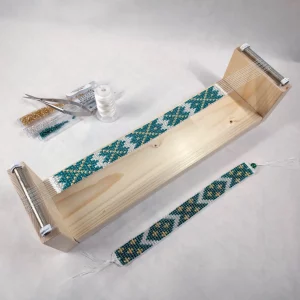 Explore the beauty and fun of beading on a loom in the Scandinavian tradition! Inspired by designs from Nordic bandweaving, this class will take you from start to finish for making your own sparkly beaded bookmark. Learn about the historic use of loom beading and how a remarkably simple process can transform seed beads into delightful designs. The class kit includes a handmade loom designed by the instructor and enough beads, silk thread, needles, and patterns to make two projects, if you wish. Enrollment Deadline: September 22, 2023
Webinar: Exploring the Art of Sámi Joik (Saturday, Oct. 7, 3:00 p.m. CT, Free)
 Iŋgor Ántte Áilu Gaup (artist name: Ailloš) grew up in a reindeer-herding family on the Norwegian side of Sápmi, a region that stretches over Norway, Sweden, Finland, and the Kola Peninsula, traditionally the home of the indigenous Sámi population. Ailloš and joiking are inseparable. He has been joiking as long as he can remember, and it has become key to his work as composer, actor, and teacher. The joik is the traditional form of Sámi song. It has its own musical rules and a very special connection to nature and all living beings. Join Vesterheim to hear Ailloš tell about his life in the far North and hear him joik.
Sparkly Pewter Thread Pendant (Wednesday, Oct. 11, 6:00 p.m. CT)
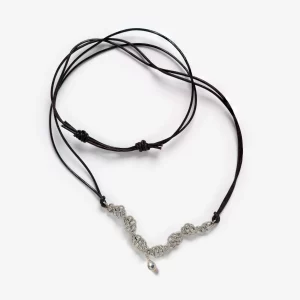 Are you ready for a new twist on tradition? Using pewter wire thread and a macramé style weave, you will create a beautiful pendant with a silver drop. Kit materials will provide you the option to create either a round or V-shaped pendant suspended from enough leather cord to accommodate your preferred necklace length, or you can use a chain of your own! No previous experience is necessary, but a willingness to use hand tools is required. Enrollment Deadline: September 27, 2023
Høstlige Frukt: Divine Flavors of Fall Cocktail Class (Friday, Oct. 13, 7:00 p.m. CT)
 Join Malina Bickford, National Brand Director for Sweden’s Åhus Akvavit, for a delightful fall cocktail class to celebrate the rich bounty of autumnal fruits and flavors! From juicy apples to luscious figs, you’ll discover how to transform these seasonal treasures into captivating creations. Bring your favorite aquavit! Malina Bickford will discuss Nordic folklore associated with the autumnal ingredients and guide you through creating two fruit-forward, crowd pleasing cocktails plus a spirit-free “mocktail.” Enrollment Deadline: September 29, 2023
Nordic Appetizers for Autumn and Winter (Thursday, Oct. 19, 5:00 p.m. CT)
 Join Vesterheim and Patrice Johnson as they celebrate the flavors of the season with an evening of Nordic appetizers. Create fun Nordic bites like salt-brined cucumbers topped with creme fraiche and honey, lingonberry-brie bites, salmon spring rolls, and other delicious appetizers. Recipes for a signature cocktail and non-alcoholic beverage will also be included. Enrollment Deadline: October 05, 2023
Handcraft at Home: Carving a Snowman (Begins November 1, available all month)
 This beginner woodcarving class will allow you to create your own snowman character inspired by Olaf from Disney’s Frozen, right down to the carrot nose and stick arms. Folk Artist and Youth Educator Steph Hughes will guide and show you how to carve a wooden snowman through a warm video demonstration. The best thing about this class is that you can watch the video and open your kit materials to explore carving whenever it is most convenient for you. Enrollment Deadline: October 15, 2023
Which events or experiences look interesting to you?
Be sure to visit previous months’ listings of virtual Nordic events. Many of the events are now available to view as saved recordings.



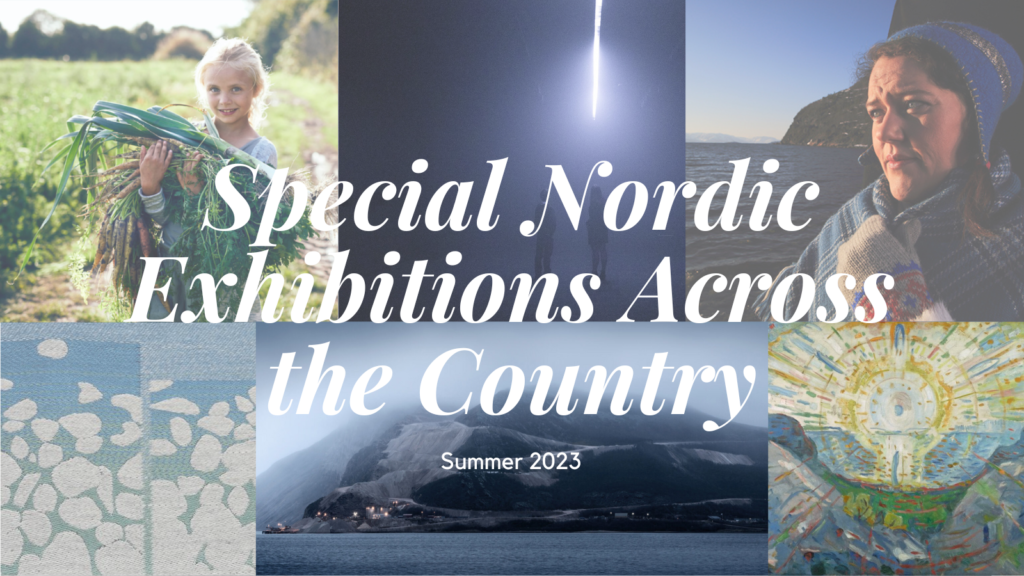
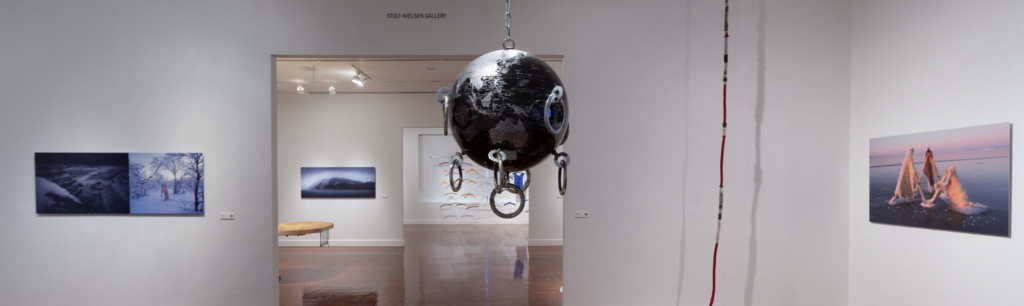

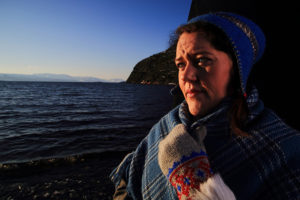


 Join Vesterheim and folk artist and culture-bearer Hege Nilsen in this webinar for a conversation exploring the traditional handcraft of the Coastal Sámi. From leatherwork, to pewter thread braiding and embroidery, to mica embellishments, you will learn about the folk art still made by this segment of Scandinavia’s indigenous people. Registration required for this free event.
 Gather some tips and tricks for building a smörgåstårta, or Swedish sandwich cake, at home. This savory centerpiece uses sandwich fillings of all varieties to feed a large group with style. Kristi Bissell of
 Join Vesterheim in July for this introduction to rosemaling for the family. This program has been designed for families to experience on their own schedules. On the first of July, you will receive an email with the links and information about how to access the program. Rosemaling (or rose painting) is a decorative painting technique characterized by scrolls, leaves, and flowers and has been traditionally applied to woodenware. Several distinctive styles developed throughout Norway. You’ll learn how to try different brushstrokes, resulting in beautiful decorative painting. Your registration provides you with a kit that includes everything you need to do this family handcraft at home. Enrollment Deadline: June 16.
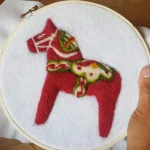 Explore the magic of needle felting with a delightful Dala horse image and take your colorwork skills to a new level. Dala horses have been a Swedish icon for centuries and this class will take a new spin on the traditional wooden painted form by recreating the image in wool. In this class, students will learn how to stretch a felt backing onto an embroidery hoop and keep it tight for ease of use and how to transform the beautiful array of hand dyed roving from the sheep at Laura’s farm’s into their own interpretation of the project. At the end, the instructor will offer suggestions for using or mounting the finished piece.
 Join Vesterheim and writer and weaver Robbie LaFleur for a lecture on the life and work of the innovative Norwegian tapestry artist Frida Hansen (1855-1931). LaFleur spent the month of May 2019, in Stavanger, Norway, on a master artist fellowship from the American Scandinavian Foundation. Frida Hansen was famous for her monumental tapestries, but she also designed transparencies—curtains and hangings with wool warp and weft. In her signature technique, she left open unwoven areas in the weaving, making the textiles flowing and flexible. Her striking designs were enhanced by the play of light and dark with the open warps. Registration required for this free event.
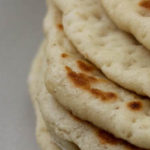 Thin and soft Swedish tunnbröd (literally, thin bread) is often used for serving hot dogs in Sweden, but they are also a great base for summery wraps. Kristi Bissell of
 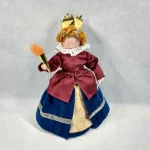 Join Vesterheim and tapestry weaving instructor Laura Berlage of Erindale Tapestry Studio on a deep dive into the beloved Norwegian billedvev tapestry
 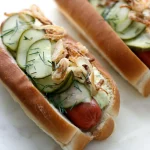 Are you ready to upgrade your hot dog situation from ho-hum ketchup and mustard to something with some serious Nordic flair? Join Kristi Bissell of
 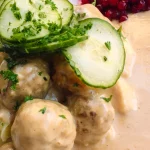 Join Vesterheim and
  From August 1-31, let the National Nordic Museum inspire you to keep moving and remain active, while having fun with your friends and family! Participants can choose between a 5K, 10K, or half-marathon challenge race. International participation is encouraged! Because this race is virtual, you can walk with your family, run with your friends, or pound the pavement solo anywhere in the world. All entrants will receive a custom Run Like A Viking T-shirt (while supplies last), racing bib, two general admission tickets (expire August 2024) to the National Nordic Museum, and a free pretzel at local favorite Skål Beer Hall.
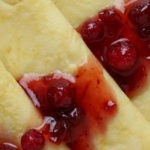 Pancakes – one of Sweden’s most classic recipes and not just for breakfast! In fact, many Swedes eat pannkakor for dessert or fika. In this demo, Kristi Bissell of
 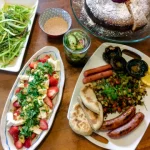 Whether you seek adventures in the great outdoors or prefer quiet afternoons on your deck, Vesterheim’s Nordic Camp Food class with
  Fire up the grill for a fabulous New Nordic late summer supper your guests won’t soon forget! Join Vesterheim and Kristi Bissell of
 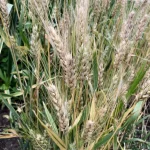 Scandinavians have been using small grains like rye and barley since the Viking age, but how did these grains end up as part of the Norwegian Immigrant story? Join Vesterheim and expert Benji Nichols for a look back at Scandic bread culture and how a resurgence in “artisan” grains is fueling a whole new generation of bakers, brewers, and craft millers, from the Midwest to Scandinavia. Registration required for this free event.
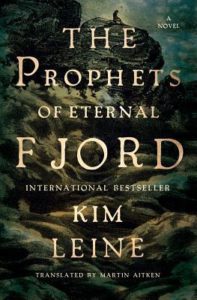 “Kim Leine’s great epic, ‘Profeterne i Evighedsfjorden’, is the story of the Danish priest Morten Falck who travels to Greenland at the end of the 1700s. Through this unfolds the tale of Danish colonisation as a completely crazy and meaningless project. The Danish officials try to keep hold of power and customs but are plagued by homesickness and resignation. Grief and anger smoulders amongst the Greenlanders, and some of them seize Christianity and the European ideas of freedom as an inspiration for rebellion against colonial power. But as well as being a critical, historical novel that reminds us of Denmark’s problematic past as a colonial power, the book is also a depiction of dirt as mankind’s basic element.”
 “Her [Sofi Oksanen’s] third novel, Purge, is about the Soviet occupation of Estonia and its consequences. Unfortunately, it is also very much of current interest with its stories about human trafficking around the Baltic. The book’s two time levels are 1992 – one year after Estonia won its independence – and the 1940s – when tens of thousands of Estonians were deported to Siberia and agriculture was collectivised. On a summer morning in 1992, old Aliide Truu finds an exhausted and confused young woman in her vegetable garden. This Zara has been tricked away from her home in Vladivostok to work as a sex worker in Berlin. On the way to Tallinn where she was supposed to start selling her body to Finnish sex tourists, she manages to escape.”
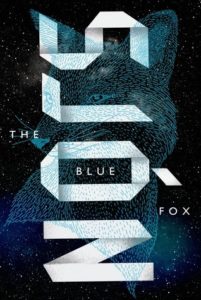 “The Blue Fox is a novel about an Icelandic pastor and a fox hunt. Sjón makes use of the Icelandic folktale to tell his story. One of the principal characters is the pastor Baldur Skuggason. He has an evil, dark side to his character. Another key figure is the strange offspring of a cat and a fox following the story – Sjón’s style has elements of a very unique Icelandic sense of humour. The Blue Fox is a short novel with a few sections. Some pages only consist of a single written line, surrounded by large white surfaces calling to mind the Icelandic expanse. This concreteness can be said to balance on the line between prose and poetry. ‘Skugga-Baldur’ is also a contemporary novel which brings up some of today’s ethical questions. Are the weak, deformed babies with developmental disorders welcome in a world where they could have been discarded already prior to birth?”
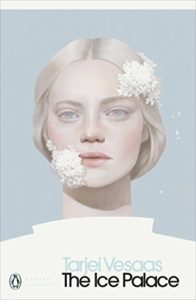 “The Ice Palace is a novel with two 11-year-old girls as the protagonists: extrovert Siss and quiet, introvert Unn. The day after a meeting of the girls at which Unn revealed that she is carrying a dark secret, Unn travels to the ice palace. This is a huge ice formation which builds up at a waterfall in winter-time. As it turns out to be made up of several ice rooms, she walks into the palace. Unn is enthralled by the beauty of the rooms, but in the seventh room she loses her way and cannot find her way out. She freezes to death with Siss’s name on her lips. The novel concludes with the story of Siss’s life and her reaction to Unn’s death. Siss now becomes the quiet and lonely one. She goes into an inner ice palace until she is finally redeemed and can move on into adulthood with a profound insight.”
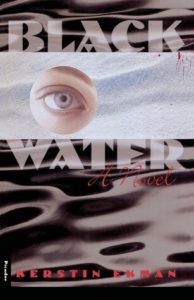 “Blackwater is a detective novel set in the town of Svartvattnet in Norrland. It depicts a woman from Stockholm, who moves in with her boyfriend in the town to work as a teacher in a commune. However, events revolve around a double homicide that remains unsolved and the consequences of this trauma for the people in the town. Kerstin Ekman’s story invites many reading styles; it can be read as a Bildungsroman, as a critical analysis of gender roles, as a mythical story with symbolic elements, but, of course, also simply as a thrilling detective novel.”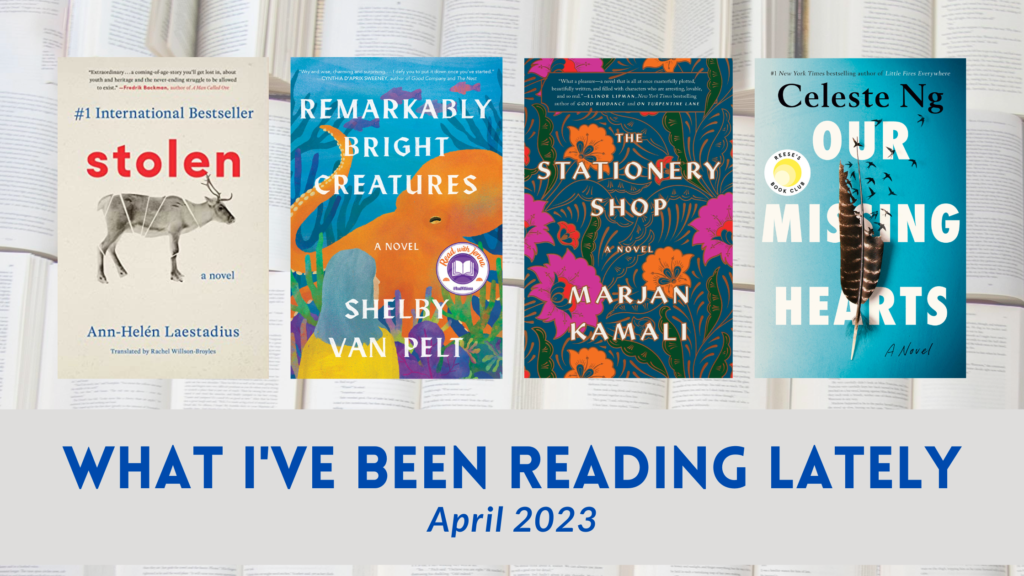
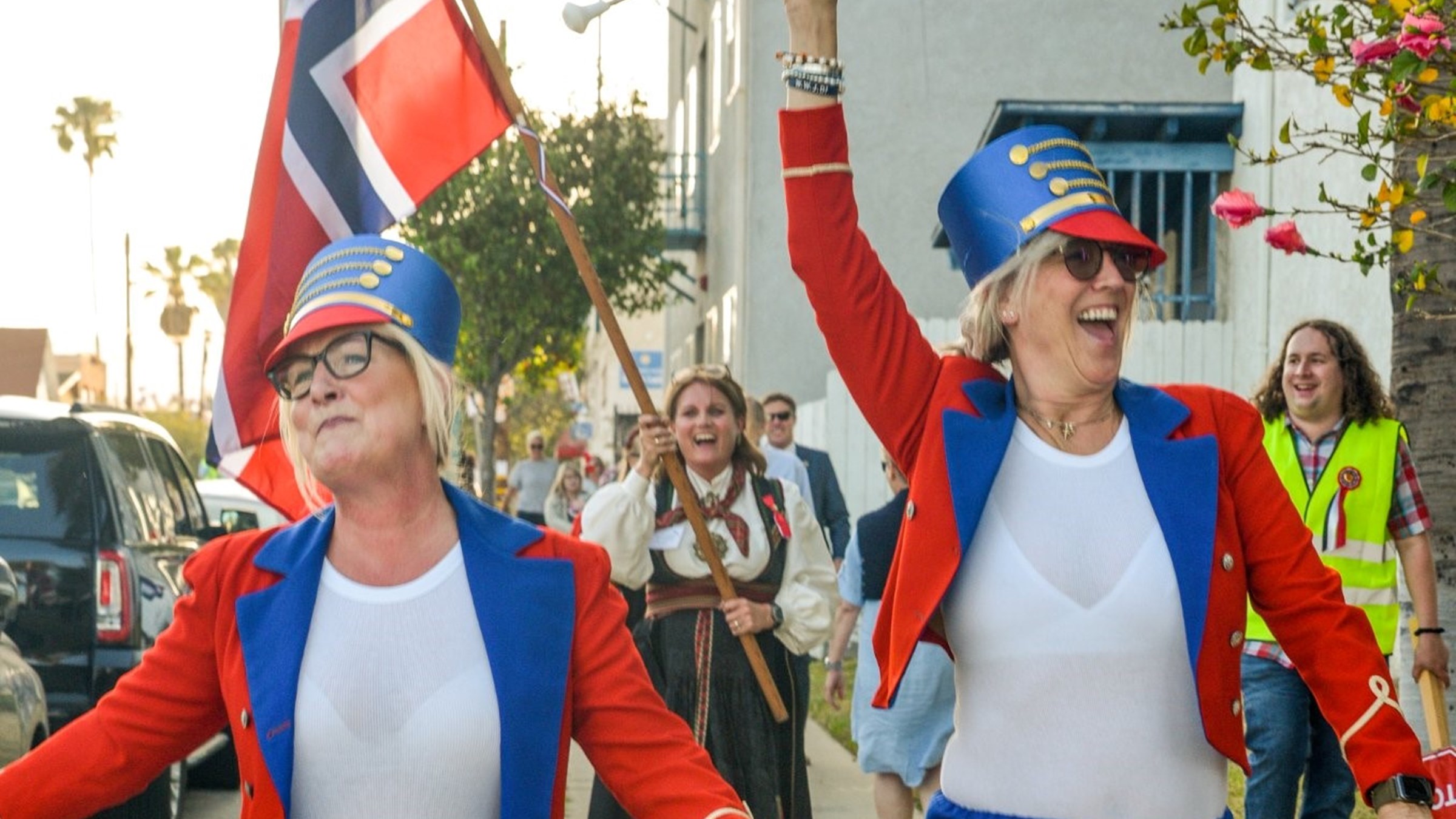

 Thanks at least in part to a Will Ferrell movie and a band of Italian heartthrobs, the annual
 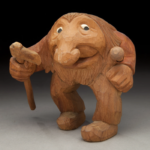 Once upon a time, strange and dangerous creatures known as trolls roamed freely in the mysterious Norwegian mountains and forests. But the trolls only went out at night, in the dark, because there was only one thing that could scare a real troll – sunlight. Gather the family together and join celebrated storyteller Lise Lunge-Larsen as she shares stories and the history of trolls in Norwegian folklore. This is certain to delight both the young and the young at heart!
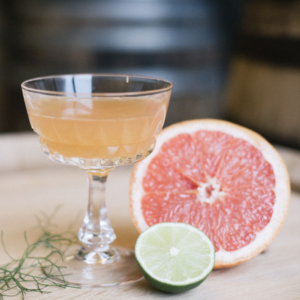 Skål! Back by popular demand, join Vesterheim for this cocktail class featuring aquavit, the traditional Scandinavian spirit with centuries of tradition and celebration. (This class is a repeat offering of the class taught in May 2022.)
 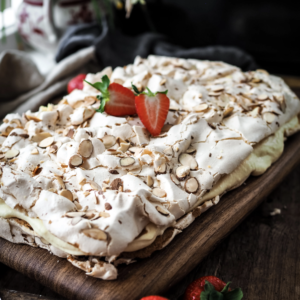 Join Vesterheim and celebrated cook and author Nevada Berg in making one of Norway’s most beloved cakes from her new cookbook, Norwegian Baking through the Seasons. Vanilla sponge baked with meringue becomes the centerpiece of this dreamy layer cake filled with custard and whipped cream. Come ready to learn, eat, and have fun! This Vesterheim cooking class is designed as a small-group cook-along. Enroll by May 5.
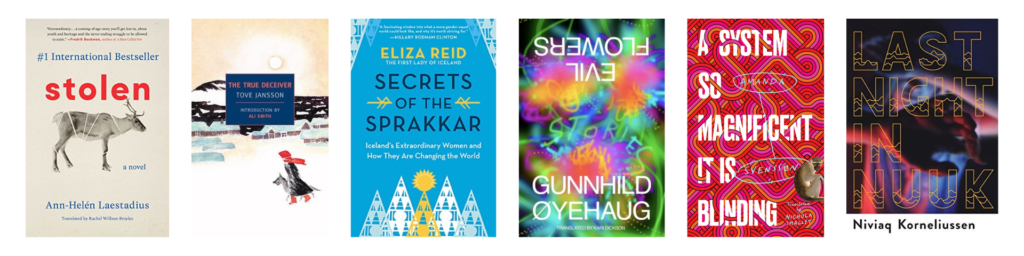
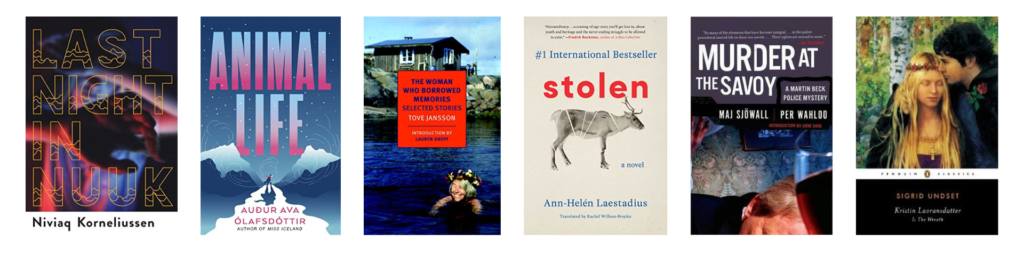
 Join Scandinavia House for a virtual book talk with Swedish Sámi author Ann-Helén Laestadius on her new novel Stolen, out now in translation by Rachel Willson-Broyles from Simon & Schuster. The discussion will be moderated by Mathilde Magga, and will later be available to stream. Based on real events, Ann-Helén Laestadius’s award-winning novel Stolen is part coming-of-age story, part love song to a disappearing natural world, and part electrifying countdown to a dramatic resolution—a searing depiction of a forgotten part of Sweden. This program will be followed by Nordic Book Club Online discussion of Stolen on June 6 (learn more and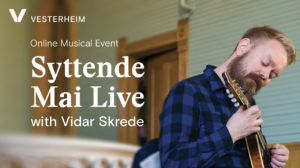
 Join Vesterheim for this family-fun reading adventure that begins June 1 and is available all summer long. You will be reading, thinking, creating, and even up and moving – indoors and out – with Luther College Nordic Studies instructor Evelyn Galstad. A kit delivered right to your home contains supplies for book-reading, a fun craft, a snack, and a scavenger-hunt-type adventure. This summer you’ll be reading The Story Orchestra: In the Hall of the Mountain King. Discover the spellbinding magic of Edvard Grieg’s musical retelling of Peer Gynt, and push the button on each beautiful scene to hear the vivid sound of an orchestra playing from Grieg’s score. You’ll also learn more about the composer and the instruments, rhythms, and musical techniques used. In the spirit of the Norwegian concept of friluftsliv, the scavenger-hunt-type activity will get your family out into the great outdoors.
 Celebrate rhubarb in all its forms! In this virtual class presented by American Swedish Institute, Kristi will demonstrate a trio of rhubarb recipes, taking inspiration from Nordic ingredients and traditional dishes. From dessert to beverage and sweet to savory, this class will cover a range of ways to incorporate rhubarb’s tart flavor and beautiful color into anyone’s early summer kitchen. Finally, Kristi will tackle rhubarb’s savory side. After all, it is botanically a vegetable, so it’s about time to try using rhubarb beyond crisps and pies! This is a live, virtual class taught through Zoom. This class is designed as a demonstration, so students can watch the entire process and ask questions before tackling the dishes at home at a later date.
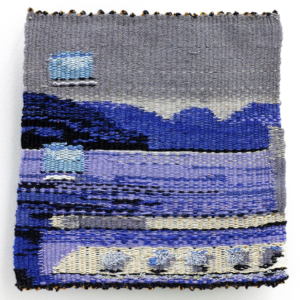 Learn the basics of weaving through the use of humble materials and step-by-step instruction in a Billedvev workshop. A common picture frame, with glass and backing removed, becomes the ultimate structure with which to create upon. Learn how to wind it with cotton thread to create your warp, and build up your piece weft by weft with a variety of yarns. Discover how color blocking, thread patterns, and textured effects can yield endless possibilities!
 Have fun with needle felting in a virtual class teaching you to make your own wool robin! Fiber arts instructor Laura Berlage will guide you step-by-step through transforming carded wool into your own adorable spring critter, using a kit of supplied materials including hand-dyed wool from her farm’s flock of sheep, robin-specific accoutrements, and a foam work surface. Enjoy the process of making your own cute wool friend! The kit supplies enough materials to make a second robin later, offering further practice in your newfound felting skills.